8 Jul 2022

Degrees, Money and the Future

For a long time, it was politically incorrect to protest the huge increase in university/college attendance across developed nations in Europe and North America. University attendance went from approximately 14% in the 1970s to over 40% today. Tony Blair famously wanted 50% of youngsters to attend university. A degree was lauded as a springboard to socio-economic mobility, and graduates were supposed to boost GDP growth and tax revenues by taking up high-skilled jobs.

But the reality is turning the dream into a nightmare. The sad truth is that the number of graduates exceeds the number of graduate jobs, and many graduates—particularly from some of the humanities and social sciences—end up under-employed. Furthermore, the burden of college debt acts like a vice on the economy. It doesn’t matter whether the debt is private debt (like in the US) or public debt (like in most European countries). Most obviously, debt harms consumption. It has knock-on social effects on fertility and demographics; young people burdened with debt start a family later (or don’t start it at all), and struggle to afford a house. Moreover, from a macroeconomic perspective, the loans are dangerous, since a lot of them are bad—that is to say, many debtors won’t repay the full amount, or the interest, or repay within the expected maturity period.

The hard truth, that young people, parents, and policymakers don’t want to hear, is that high-skilled, university-level jobs make up at best 20% of the available jobs. I am also highly skeptical that this will increase in the future. The percentage may increase, but only because the total number of jobs will decrease as more jobs are destroyed by automation (high-skilled jobs are much more resistant to the effect of automation). The jobs that require a degree are highly technical and/or vocational: medicine, pharma, nursing, dentistry; programming; engineering; data science; and so on.

Automation, AI and the post-scarcity economy are things that have been discussed elsewhere in more detail than I will go into here. The long and short of it is: we are heading towards are a post-scarcity economy. We are not there yet, and the process will take time. Also, let me be clear that a post-scarcity economy does not mean the end of scarcity; some goods and services will remain scarce, but the majority will be available in abundance. To give you an idea: food, energy and consumer goods will be abundant. Heck, they are already pretty abundant right now. Have you ever seen a shortage of nails? Nails, like many other goods, can be mass-produced for a very low price, and they require almost no human input in their creation. Other things will remain more scarce, especially things that require a lot of high-skill human labour.

That’s the key, the salient point of this little essay: labour. Historically, we have regarded labour, work, as something valuable and worthy. An entire religion, Protestantism, revolves around the value of work. Work means steady payment; a livelihood. But labour is inherently tied to scarcity. Humans have to labour because things are scarce: food, shelter, medicine and so on. So what happens when all the work is done by robots and software? Let’s assume that everything could be done by robots or computers, just for the purposes of this thought experiment.

Ideally, we would live in a utopia; humanity would never want for anything. In reality, the barrier lying between us and this utopian vision is capitalism. We admire capitalism because it has worked well for the last two centuries or so—with government regulation and the managing of natural monopolies, of course. Adam Smith was more or less right. He was misunderstood by the braying free market neoliberals; Adam Smith never argued that the “invisible hand” would make markets self-regulating in general (only if a very specific set of criteria were fulfilled). A mixed market+command economy is the way to go. This is something that France, the UK, Scandinavia and Germany understood, but which the US and Soviet Union did not.

Unfortunately, I think the economic model of the past century may no longer function in this post-scarcity future, because it is still predicated on the idea of renumeration for labour. To put it bluntly: in the future, many, perhaps most, of the population will be unemployed. They will be unemployed for no other reason than that they will have nothing to do.

I believe that we will need a Universal Basic Income at some point in the not-too-distant future. Moreover, I think a successful economic model of the future will still have capitalism (i.e. capital, companies, competition etc.) but in a far more diminished way. Capitalism will be limited to areas of rapid innovation, scarcity, and high differentiation. Everything else will be administrated by organs of the state, be it local, regional or national governments. Money will still exist, so this will be socialism, not communism. The state already administers 40–50% of the economy measured by GDP, so this should not be a big pill to swallow (newsflash, Americans). Why will it be adminstered by the state, you ask?

This leads onto the next point. Capitalism is unstable and destructive. It creates a small number of winners and a large number of losers. (Sorry, right-wing Americans.) In the future, this tendency will be exaggerated until society will fray apart. An industrial reserve army of the unemployed—an army of losers—will be created. There are only three possible scenarios. One, capitalism tries to maintain itself through coercion. Two, socialism prevails. Or three, massive social unrest results in anarchy, and the post-scarcity economy is destroyed, bringing us back to the status quo ante… by which I mean something before 1770: the medieval world. This scenario seems more likely in third world countries that are politically unstable.

Let’s go back to square one, and the original point of this essay. More university degrees will not lead to better pay or employment. There are powerful economic and technological forces at play that are leading us to a world with high unemployment. Instead of creating more debt and broken dreams, policymakers need to focus on managing the transition to a post-scarcity economy based on UBI, the provision of basic goods, and reduced inequality.

What does this look like, in practical terms? Well, it won’t be a world of perfect equality. I don’t believe such a thing is possible or even desirable—and I say this as a staunch socialist. Natural inequality is the reality of the world we live in. Some humans are smarter than others, or more talented, or hardworking; they should be rewarded. So the economic situation will look like this. Everyone will be guaranteed a basic income of, say, 2000 euro a month. They can earn extra by participating in the labour market when possible. Some people will earn high salaries, like 3K, 4K, 5K a month because they do something difficult (and they will pay taxes on their income). And there will be a few millionaires or billionaires, but fewer than there are today. The state’s revenues will shift from being predominantly taxation funded to being funded more by the sale of goods, e.g. food and housing. This is because there won’t be enough taxpayers to fund public goods like healthcare and (obviously) UBI itself otherwise.

Money is hard to understand for the layperson. Money is not scarce; it can be created at will. But scarce things do have a higher price. This is why creating more money causes inflation: there is more money, but the number of goods does not increase.

How can the state fund UBI? It’s not through taxation: you can tax UBI, but since that money comes from the government, there is no mathematical way to fund UBI with itself. Rather, the state can simply print money and ensure that the supply of goods (which it controls) matches up. The state will also tax corporations that make large amounts of money through the sale of goods and services. This system will ensure that basic goods are provided, but also that people have disposable income to spend on more whimsical things—art, fine dining, holidays, whatever—at their discretion. Remember that this will not be a truly post-scarcity society, just a “mostly” post-scarcity one. Provided that the money supply is managed sensibly, this system will work very well.

Now that I think about it, this system could already be partially implemented in the world we live in today, since we are already approaching post-scarcity in some ways. But to accomplish this, we have to have political awareness. We cannot allow our politicians to further the interests of the rich, and pull the wool over our eyes. People are not unemployed because they are lazy, or because they don’t have a degree, or because they don’t know how to code. Only 1% of the population knows how to code, and demand is at most 2 or 3%. People are unemployed because of technological growth.

Some people will not like what I am saying about degrees. Humanities people in particular think that humanities degrees are being devalued in favour of STEM. But actually my argument has nothing to do with funding one or the other. It is true that humanities degrees do not pay as well as (most) STEM degrees, so that is a good argument to avoid going into debt for one. But I would very much be in favour of subsiding degrees so that the best humanities students can study for free. The real problem—which I want you, the reader, to understand—is when we make 1 in 2 youngsters get a degree just for the sake of it. Believe me, all those psychology students (psychology is one of the most popular majors) don’t really want to be doing a degree; they just want to party. Them getting a degree, however, prejudices bright students who are genuinely interested in learning. It strains financial resources and devalues the worth of a degree.

Thanks for reading this far. If you have some thoughts to share, please comment below.

10 Apr 2022

So Long, the Netherlands

Hello, dear readers!

It has been a while since I wrote a blog post on here. Blame it on my master’s degree, and moving prepations. Yes: I am moving from the Netherlands back to Romania and completing my thesis remotely. This is largely a practical decision to save money on rent. But it got me thinking about the deeper issues with this country, and made me seriously rethink any long-term plans to stay here.

So, without further ado, let me talk about the downsides of living here, because not everything in the Netherlands is rainbows and sunshine. (We’ll get to the rainbow part.)

Forget about owning a house

It is a mathemetical impossibility for anyone on an average income, or even above-average income, to afford a nice place in the Randstad. To buy an average apartment in Amsterdam for €335,000, assuming a 30K euro downpayment, a 1.85% interest rate, and a 20 year repayment period, would cost an average of €1500 a month, with total interest amounting to €60K. Yes, I did the math!

A single person earning €3300/month and paying 35% income tax would not be able to afford this. A couple might, if they also have sufficient unemployment insurance and emergency funds. But that’s not exactly what I envisaged as my dream for the future: living in a tiny 57 square metre apartment, for 20 years, both partners working full time, just to afford the mortgage. It also makes the prospects for a family even slimmer.

OK, so how about living outside the Randstad, in a place like Enschede? Well, unfortunately, house prices have increased dramatically even here, especially in the last couple of years. My colleague at work is paying 300K for a house in the area.

Self-building might be the only affordable option left, but that’s assuming you find a buildable plot at a decent price, and you have planning permission from the gemeente. There are far too many legal and bureaucratic hurdles to building in this country.

Think twice about living outside the Randstad

Even if you can build (somewhat) affordably in a place like Enschede, Nijmegen or Tilburg, you might not like the people there. Unlike Randstad Dutchies, these people are among the most closed-off in Europe; it’s very difficult to get involved in friend groups and make life-long friends. This isn’t just me—studies have shown this.

So the Netherlands is super gay friendly, right?

Amsterdam certainly is a gay Mecca, but Enschede is more like a gay desert in terms of the quality and quantity of partners. Furthermore, if you want to start a family as a gay couple, it’s better to look elsewhere.

Paid surrogacy is illegal in the borders of the Netherlands; domestic adoption is almost impossible because the demand for healthy children is greater than the supply; while international adoption was recently banned. Even when it is eventually allowed again, international adoption is astronomically expensive in this country, with prices starting from €20,000. (No, that is not a typo.)

To be perfectly frank, the amount of bureaucracy around adoption makes me angry, and constitutes de facto discrimination against gay couples and infertile heterosexual couples. So much for a country that prides itself on being liberal.

In the UK, domestic adoption is much easier, and international adoption starts from 2000 pounds (notice that there is one less zero in that sum). In Scotland, the government will even offer a discount on the adoption fee to low income households.

The only realistic option in the Netherlands is to join forces with a lesbian couple and father children through artificial insemination. This can be done with a quid-pro-quo arrangement, where the lesbian couple adopts the first child, and the gay couple adopts the second. This is sometimes called “altruistic surrogacy”. Of course, it assumes you are good friends with a reasonably young, fertile lesbian couple. Another option might be for my husband’s sister (if he has one) to act as a surrogate (if she agrees).

Private healthcare sucks

When people think of European countries, especially Americans, they imagine universal healthcare. This is the case in the UK, where the NHS will treat any resident free of charge, and the costs are funded entirely through general taxation. The UK is one of the few countries in the world that has this system.

What we actually have in most of Europe is a system where healthcare entitlement is on the basis of contributions (taxes) by people who are employed. This means that it is possible to lose your health insurance if you do not pay into the system for more than a few months (although the legislation usually has a provision for life-or-death scenarios). Reasonable exceptions are made for students under 26, old people and disabled people.

In the Netherlands, it is worse, because public healthcare does not exist, unlike say in Germany, Spain, France, Italy, Romania or even Ireland. In the Netherlands, everything is private, and you are required to pay for private health insurance. The only other developed country in Europe that has this system, as far as I know, is Switzerland.

This means that healthcare in the Netherlands is one of the most expensive in Europe, with high premiums and high “eigen risico” (out of pocket expenses even if you are insured) – the Netherlands has one of the highest healthcare costs, as a percentage of GDP, of any high income EU country.

Not only that, but Dutch GPs are among the most incompetent I’ve ever met, and switching GPs is a hassle. Dental healthcare is likewise problematic, with long waiting lists and fairly expensive procedures. I go to Romania for my dental needs; in the Netherlands, I can only go to the emergency dentist.

In conclusion

I have been doing some thinking about my future, and have come to the conclusion that the Netherlands has no future for me. I have given up on serious efforts to learn Dutch, because what’s the point? I can live with private healthcare, but no house and no kid are dealbreakers.

Instead, I have crunched the numbers, and remote work is a no-brainer for a data analyst like me. I plan to live a short amount of time in Romania, in order to save money; sell an apartment; and renovate my ancestral farmhouse (this is a backup option for my me and my family). From then on, I will migrate to greener pastures. Rural Spain is top of the list for gay friendly and affordable; rural Scotland is the second option, with higher prices but more options to adopt.

To put it more pithily: when the system is broken, you need to hack around it. That means adieu, the Netherlands.

16 Mar 2022

Some thoughts on the situation in Ukraine

I would like to share my opinion on the war in Ukraine. This desire stems from the fact that I have Ukrainian friends whose families are affected by the situation. It’s also because my country, Romania, has been taking in Ukrainian refugees. And of course: this should concern all European citizens, and even citizens from across the globe, in places as far away as Taiwan.

Sanctions vs Military Aid

I wouldn’t say that sanctions are useless—but it’s clear the EU has relied on them too much. When a country starts an unprovoked invasion of their neighbour, it’s not like a trade dispute or a diplomatic spat; military action should be countered, and can only be countered, by military counter-action.

That said, sanctions can do useful things, but we have to be selective about them, and think about unintended consequences. For example: sanctions targeting individual oligarchs, like seizing their yachts and freezing their accounts, hurts those loyal to Putin. It gives them incentive to pressure Putin into stopping the war. Or killing him outright.

Another sanction that has proven extremely effective is seizing Russian foreign currency reserves, as this has made the ruble plummet, which makes it harder for them to buy military hardware on the international market. Even domestically produced arms usually require components manufactured outside Russia, such as chips.

Sanctions that punish ordinary Russians, however, are more likely to make the Russian populace support Putin. Of course, not all sanctions fall into neat categories. Removing Russia from swift makes it harder for them to finance the war, but it also hurts ordinary Russians.

What history has shown time and again is that when an ally is attacked by an aggressive neighbour, the best response is always military. The weapons that have been sent to Ukraine have accomplished more than any sanctions. They have saved civilian lives; destroyed Russian material; limited Russian territorial gains; and forced Putin to seriously negotiate. If the war hadn’t been going so badly for Russia, they would never have entertained serious talks.

The EU should stop deluding itself into thinking that diplomacy and sanctions make up for a strong military. Diplomacy only works when it’s backed up by military might. Or, as Mao Tse-Tung put it: “Power grows out the barrel of a gun.”

Anyone who argues for pacifism needs to seriously evaluate their world view. We do not live in a world ruled by international law, UN crap, or even by economic forces; the world remains the same place as it’s always been since history began. A jungle.

Jets or no jets?

Some eastern European NATO and EU states, most notably Poland, have offered to send Ukraine Mig fighter jets and S-300 SAMs (surface-to-air missiles). Ukraine doesn’t have pilots who know how to fly American or European jets, so they can only use Soviet equipment they have trained to fly in.

The plan was to exchange Polish Migs for American F16s, after which the US would donate the Migs to Ukraine (making sure they changed the insignia and so on). Biden, however, got cold feet at the last minute.

Frankly, I don’t see why sending Migs or SAMs would be escalating when sending Javelins, NLAWs and Stingers is not escalating. Even if the war does escalate, so what? Russia clearly can’t win a conventional war against Europe or NATO. Their military is hampered by bad logistics, corruption, and limited spending power.

Nor am I convinced that we should allow Russia to conquer Ukraine, because as WW2 has shown, appeasing a tyrant never works. Give them a Suedentland and they’ll take Czechoslovakia, Poland, France… The sames goes for Putin.

The nuclear scare

Nobody wins in a nuclear war. Everyone knows this, including Putin. But Putin is relying on the so-called “Madman Doctrine” to scare everyone into believing he will use the red button. NATO and the EU should not allow themselves to be intimidated. I don’t think Putin’s threats are anything more than sabre-rattling, and if not, somebody rational will probably put a bullet in the back of his head if he gives the order.

As Benjamin Franklin put it: “Those who would give up essential Liberty, to purchase a little temporary Safety, deserve neither Liberty nor Safety.”

What is the future of Ukraine?

I could be totally wrong here, but I’m betting this war will be over in several weeks or a few months. The invasion is too expensive for Russia in manpower, material and sanctions; they also have little to gain aside from offshore gas in Crimea. Most likely, Ukraine will cede Crimea and Donbas in exchange for withdrawal of Russian troops.

Zelensky and Boris Johnson have implied that Ukraine will not join NATO as part of the negotiations. To be honest, I don’t think this is such a great idea, as it will give Russia the option to try another invasion at some point in the future.

But, supposing Ukraine does not join NATO, they can still join the EU—which obliges member states to protect each other. Article 42.7 Treaty of the Functioning of the European Union (TFEU) is much like Article 5 of NATO:

If a Member State is the victim of armed aggression on its territory, the other Member States shall have towards it an obligation of aid and assistance by all the means in their power, in accordance with Article 51 of the United Nations Charter. This shall not prejudice the specific character of the security and defence policy of certain Member States.

Of course, joining the EU will take a long time. Even though I support Ukraine’s Accession to the Union, like Poland and the Baltics, I agree with Macron and other Western European leaders. Ukraine can’t join in a day. The rules are there for a reason: they aren’t just for the benefit of the EU—its Single Market, political cohesiveness and institutional functioning—but for Ukraine as well. Tackling corruption is vital.

Moreover, let us not forget the huge economic disparities between Ukraine and the EU. Poland has 4 times the GDP per capita of Ukraine: Ukraine has just €300/month for each citizen, whereas Poland has €1200 and Germany €3400. You can’t just give Ukrainians unlimited freedom of movement. Their country will need many years of financial aid, loans, and private/public investment to become a full member of the EU.

With that said… Nothing prevents the EU and US from cooking up a Marshall Plan. This could include money for rebuilding but also military training, equipment, and financial support to buy weapons systems. With a population of 40 million people, Ukraine can defend itself—provided it has enough hardware and the training to operate it.

I would even be in favour of stationing the EU army (which is going to happen) on Ukrainian soil—although that will be a hard sell for some EU countries, and will require a loose interpretation of the word “neutral”. But hey, Russia’s promises aren’t worth shit, so why should the West pretend otherwise?

Changes to the EU

Putin’s invasion has been terrible news for Ukrainian people… but great for the EU! East Europe and West Europe are united like never before. Putin has even driven a Russian-shaped wedge between Poland and Hungary. Orbán is alone now, with Poland and Slovenia distancing themselves from his pro-Putin politics.

As for the aforementioned EU army, it might not necessarily be called the EU army. Officially, it will be called the Bundeswehr, and the Luftwaffe. But it will be the EU’s army. It will be fuelled by German money, French military tech, and I’m willing to bet it will have an English-speaking foreign legion comprised of EU nationals.

9 Mar 2022

Review: Hatch, the Dragons of Laton #1


Buy link

The best way to describe this book is using a metaphor. It’s a crude, unpolished natural diamond. Scratch the surface of the amateurish writing, and you find an epic tale where villains are villains and heroes are heroes. The world that the author imagines feels rich and engrossing, taking me on a nostalgic trip back to my favourite fantasy novels: Garth Nix’s Keys to the Kingdom, Trudi Canavan’s Magician, and especially, Paolini’s Eragon.

But I can’t pretend this is a great book, as it has too many flaws to overlook. Firstly, the writing is riddled with mistakes. There are sections where nearly every page has a mistake: the wrong word is used, a grammatical error is made, a sentence is incomplete, etc. The author should go over the text with a fine-toothed comb, or get a proofreader to do it. Because as a reader, it was painful. As a fellow author, I winced; this is exactly the kind of text that gives self-publishing a bad name.

The problems don’t end with the prose. The characterisation leaves something to be desired as well. In short, it’s missing depth. Most of the characters feel like clichés: the old king, the valiant elder knight, and so on. The only character that actually felt fleshed out was Fulgid, the golden dragon. (By the way, Fulgid is a horrible name for a dragon.) Writing deep, meaningful characters takes experience that the author clearly lacks. But I would suggest that he come up with a sketch of each main character’s back story and motivations.

I did enjoy Tirate and Liah as the villains. Tirate in particular showed cunning, forward thinking and intelligence, which made him an effective villain. One thing I would say: I found it difficult to believe that Tirate couldn’t get a single dragon knight to back him, given how important they are both militarily and politically. It would have made the conflict more interesting. As for Liah, she provided a certain comic relief to the story.

Aside from characterisation, what annoyed me was how Ammon, the protagonist, lacked a certain amount of intelligence. He constantly got himself into bad situations and would have died several times if not for the intervention of Fulgid, the little dragon. Frankly, the dragon seemed far more intelligent than he was. It almost came to the point where Fulgid became the deus in the machina: if Ammon was stuck in an impossible situation, Fulgid would come to rescue him, as surely as night follows the day. What the author really needs to do is make Ammon think his way out of a problem.

Another thing: there are too many instances where the plot hands Ammon and his allies an advantage on a silver platter. His dragon is more special than anybody else’s. His dragon finds a huge calentar deposit. His blood line is so special that everyone recognises him as king. Life is rarely this easy! He needs to face actual challenges—it’s what makes him grow as a character.

So what’s my final verdict? Objectively, this book is badly written, filled with typos, and stuffed to the brim with clichés and deus-ex-machina. But my heart wants to keep reading. Because there is great potential in this story.

Rating: 3/5

 Note: there is no sequel to this story! The author has yet to write one after a good couple of years. Be aware.

12 Apr 2021

Announcing PayHip

Hello readers!

Let me begin with some good news: the Kickstarter got funded! If you were one of the backers, you should already have received your survey. The eBooks will be delivered soon. The paperbacks will take a little more time: I am waiting on my publisher to get the spine and back cover ready.

Now, onto the next piece of news: I have put the Necromancer and Fallen Love up on PayHip, a financial technology provider. This includes not just the eBooks, but also signed paperbacks of Fallen Love. You can’t buy those on Amazon! (Although, if you just want a paperback, Amazon is still a cheaper way to get it.) The paperbacks cost €25 + shipping and they will go out in batches every couple of weeks. Link here

I have kept the Amazon sales links as well, but if you can, please buy my book from the PayHip link—that way, I will earn more, and you won’t be giving another cent to Mr Bezos. The links are on the landing pages at the top of the website, for Fallen Love and the Necromancer respectively.

I appreciate any advice on the new landing pages. Would you, for example, prefer to read a preview of the book on Amazon, or are you happy with reading a PDF?

Finally, I am getting ready to reprint the Necromancer! It will be available to buy on Amazon and directly through PayHip soon. Tell me if you would be interested in getting a copy. You can comment below or contact me on social media.

10 Mar 2021

Kickstarter Update

Hello readers,

We are drawing on the final few days of the Fallen Desire Kickstarter. We are 80% funded, but until we hit the finish line, nothing is guaranteed! So if you have been waiting for payday, or haven’t had the time to check it out, please do it now.

Cover

Some really cool rewards are still available, including the Arch Demon special—which offers you the chance to feature in one of my future books as a character! Both ebooks and paperbacks are available, including signed copies. There’s something for every budget. Oh, and don’t forget to check out the video below.

If you want to discuss the story, I am doing a Q&A on Goodreads.

Thanks for reading. Wish me luck!

21 Feb 2021

Who are the Archdemon Backers?

Hello readers!

As promised, today I am writing about how I came to write Fallen Desire—the second book in the Fallen series. I will talk about how I came up with Roshika and Archdemon Tim—two characters based on my Kickstarter backers! I will also talk about my editing experience and how I changed some of the scenes.

Roshika and Tim: Two very different people

Roshika is a witch: a very old, very wise witch. She’s been around since the year 2000, and since the book is set in 2520, that makes her five hundred years old. She is originally from India, but has lived in Europe and the US. Roshika’s motivations are simple: protect the world from Lucifer and his progeny.

Roshika’s character is based on Jeanne Smith, Great Demon backer extraordinaire. Of course, what exactly the two have in common may not be immediately obvious—Jeanne is certainly eccentric, but she’s not exactly a five hundred year old witch. (Or is she?)

One of the main characteristics they share is their love for animals. Roshika has a pet cat, a raven friend, and two snakes. Jeanne also owns cats, a couple of snakes, and a dog. She does not own an intelligent raven (who kinda of talks!) but you can’t have everything in life can you?

Tim, on the other hand, is a more exact match with his namesake. They share the same name, obviously. Moreover, Archdemon Tim somewhat resembles a younger version of my superfan: he’s very gay, naturally, and loves having fun. He has a nihilistic and ironic approach to life—you only live once, so you better make the best of it. When it comes to his enemies, he is merciless.

It’s strange how my fictional characters are so much more ruthless than their real-life counterparts. We should appreciate the fact that civilisation allows us to be nice to each other.

What’s it like working with an editor?

Robert, my editor at Terran Empire publishing, is actually not the first editor I have ever worked with. I have worked with two editors before him: Matrice, who read the Ark, the precursor story to the Fallen series; and Annie Nybo, who worked with me on Fallen Love, but only for the first few chapters. (Editors are expensive!)

Robert is the first editor I have worked with who was along for the “full ride” if you will. He’s read the series; he knows the story and the characters well. He gets it.

Robert’s responsibilities boil down to the following:

  • Tell me what works and doesn’t work in the story. His feedback led me to add two great new scenes to the story—a scene where Mark visits a museum, in which Lucifer has decided to showcase all the people he turned to stone. (Yes, it’s dark!) In another scene, Mark has an in-depth conversation with Lucifer about who he is, where he came from, and what he wants. This part of the story replaced a very weak and redundant scene.
  • Find typographic errors: mispellings, grammar mistakes, and missing/wrong words.
  • He knows my audience and what they will appreciate (or not appreciate).

If there’s one thing I wished Robert did more of, it’s be more critical. Editors are not there to be nice, or to pamper you (excessively): they are there to make your story better.

Want to know more?

Head over to my Patreon page where I will be sharing more detailed accounts of how I write my stories, as I write them. You will also get to see snippets of new books as they are written, long before the rest of the world even knows they exist.

19 Feb 2021

The Kickstarter is Live! Get your copy of Fallen Desire

Hello faithful readers,

After an extended delay on their end, our Kickstarter is now finally live! Following months of writing, editing, planning, and design, the book is ready to see the light of day. Support the Kickstarter.

If you like urban fantasy stories in the vein of Cassandra Clare’s Shadowhunters, Lauren Kate’s Fallen, or Alexandra Adornetto’s Halo, you will love Fallen Desire. It’s got black magic, scifiesque cityscapes, and a healthy dose of spy thriller. And it’s about two boys who are in love. Yup—all that and LGBT representation to boot. Still not convinced? Why not read the blurb:

The Devil is many things: beautiful, cruel, and sometimes mischievous. But above all he is cunning. Thrust into Hell against his will, Mark must learn to navigate this fantastical world – a world where demons rule over mortals, and curious little imps can be found spying in hidden nooks and crannies.

Mark needs allies, but when betrayal lurks in every corner, who can you trust?

I will be releasing another post detailing the journey of how I came to write this book: I will tell you all about what it was like to write my fans in the story; what had to be cut; what’s it like working with an editor; and how some of the scenes got written. Stay tuned!

10 Feb 2021

Redesign

 Hello readers,

You may have noticed that I have made some changes to the blog. The most obvious is the removal of the background image and the new font (it’s Garamond by the way). While the old website was certainly striking, it did have some problems: I thought the body font—Josefin Slab—was too difficult to read for extended periods, especially since white-on-black is harder on the eyes than black-on-white. On top of that, the page took too long to load because the fonts and graphics were so big.

I am also fixing some substandard quality images which are caused by Blogger doing very poor rescaling and compression. I have a found a way around it, so I no longer have to use Google Drive links—which get blocked by anti-trackers.

Speaking of which, please disable your tracking protection for my website. There really is nothing nefarious at play; I use some Mailchimp scripts for the signup forms. I am looking for an alternative solution in the long-term.

The webpage is now also slightly wider, so you should have an effective horizontal resolution of 1366 pixels or more. I chose this width because it’s one of the lowest horizontal resolution around (it’s mainly used by netbooks and budget laptops). This has allowed me to increase the font size, for your reading pleasure of course.

More changes are coming, so keep an eye out!


18 Dec 2020

Fallen Desire is nearly ready!

Hello everyone!

You may be wondering what has happened to yours truly. I have not sent an email—or been active on social media—for quite a while. Rest assured there are good reasons for this. The first is that I’ve been up to my neck in work—this semester has been code, code, code. There have been days when I programmed in Java from morning till evening.

The second reason is that I’ve been working with my editor at Terran Empire. Fallen Desire is now at the stage I call RC: release candidate. (That’s a term I borrowed from the software/open source world.) While one or two improvements remain on the TO DO list, the book is basically finished and ready for production.

So what happens next? Well, to begin with, a few of my readers (especially Patreon backers) will receive ARC requests from my editor. So keep an eye out on your inboxes. But anyone is free to chat on Facebook or the Discord channel.

What about the cover, you ask? Well, the designer is still working on it. It should be finished in January. I will definitely be doing a cover reveal.

If all goes to plan, we might even have the Kickstarter ready to start in January! But hold your horses, OK? I will post updates and keep you guys in the loop.

This isn’t the cover for Fallen Desire, but it’s an inspiration for how the next cover will look like ☺

28 May 2020

Fallen Desire is coming along nicely

Hello readers!

I want to share with you all a brief update regarding Book II, my future plans for the series, and some of my upcoming life events.

I’ve written 60,000 words and have finished Part One of the story, which is wonderful! A great many events that I’ve been planning, foreshadowing, or teasing the reader about are now coming to fruition. The entirety of Part Two is plot, action, resolution—all the good stuff. While worldbuilding and characterisation occupied much of Fallen Love and some of Fallen Desire, this is where it all comes together.

Do I know when I will finish? No. Despite my good progress, I have a Master’s degree incoming, plus this book is no paperweight. I anticipated it would be around 90,000 words, and right now it looks like it could easily be 100,000. Is there a Book 3 in the works? Well, there might be a prequel novella. (Maybe.) But the buck ends here.

Speaking of master’s degrees, I have decided to study Business and Data Science at the University of Twente in the Netherlands. You could think of it as an MBA with an MSc; it’s two years long, 9 months of which is made up by internships. While business is a straightforward subject for yours truly (I’m an economist remember?) the data science component will require me to brush up on my Python and statistics. Not to mention the dreaded linear algebra and calculus.

At the moment, however, I’m busy trying to find housing. This is, of course, a pain in the behind.

Anyway, I have one more piece of good news: I have a new fan! Her name is JR Vaineo, and she’s a fantasy writer too, so check out her books. I’ll probably republish the review here on the Magical Realm. Stay put!

11 May 2020

Big News: Fallen Desire is coming out with Terran Empire Publishing!

Hello faithful readers!

I am announcing my new publishing contract with Terran Empire Publishing, a small press based in California (though my relationship with them started well before the publication of this book). I have recently signed a publishing contract with them for the rights to Fallen Desire, Book 2 in the Fallen series. I already announced this on my mailing list and social media, so I might as well do it on the Magical Realm. I will use this as an opportunity to briefly delve into some additional detail.

What does publishing a book actually mean?

In legal terms, a publishing contract is an agreement whereby the Author sells the rights for a written work to the publisher, in exchange for royalties and possibly an advance. (That’s a test good contracts must meet: there should be a quid pro quo.) But what does that actually entail? Why would I do this instead of just publishing it on my own like I did the Necromancer and Fallen Love?

Well, it boils down to a few different important advantages and one major disadvantage. The disadvantage is that my royalties per book are about half what they would be if I self-published. The advantages are numerous:

  1. I get free editing! Which is great, because editing—particularly developmental or story editing—costs a lot of money otherwise. It’s probably the single biggest added value service in addition to a cover.
  2. I get a book cover! And I don’t have to pay for it out of my own pocket.
  3. The publisher has a physical presence in California, which is important for selling to bookshops. They also make my book known at local conventions that, for obvious reasons, are very difficult for me to attend (I live halfway across the world).
  4. Translation into Spanish is a possibility.
  5. And finally, I get someone to market for me! This is such a pain in the ass to do on my own.

Why Terran?

Why not any other publisher? We were already working together as I was doing some data analysis work for them. They pitched me an offer for the 2nd book; I decided it looked good. They were also open to negotiation; that meant I got a very solid contract with clear expectations, and no nasty loopholes.

So how is Book II coming along?

Pretty well, for the most part. I have written more than 50,000 words, and I’ve almost finished the first round of edits. I do my first round of editing once I reach the halfway point (more or less) in order to fix problems as they crop up: I mop up everything from typos and worldbuilding inconsistencies, to characterisation issues and plot holes.

I could in principle wait until I finish writing the story and have my publisher do all this, but I prefer to resolve issues as they come up, because that makes writing the end much easier for me. As it is, I probably will send the manuscript to the publisher in a few weeks.

I am cautiously optimistic that the book will be ready in a couple of months; I expect it will be around 90,000–100,000 words. It will definitely be bigger than Book 1, but I’m just not sure how much bigger.

Any other news?

I’m preparing for my MSc in Data Science and Business, which is going to be a lot of work. Arranging housing is next on the list.

I was supposed to get my driving licence this year, but will I? I’m not sure. The whole coronavirus pandemic has delayed an already slow, bureaucratic process. Since my MSc is non-negotiable, I have to leave in August.

But hey, I’m staying positive! I’ve been working out for the past 2 months. (What else was I supposed to do? Go crazy in quarantine?) I am now the proud owner of a six-pack, which feels pretty statuesque—a feat I attribute to low body fat and smart exercise. Now I’m working on my biceps, triceps, deltoids, and pectoralis major. Plus my transverse abdominis—a tricky muscle to work.

(Alex, as you might have noticed, is obsessive. When he strives to complete a task, he does it, and he does it well. Even if it means metamorphosing from a book nerd into a fitness freak.)

Finally, one more piece of good news: my hair is growing back! In particular, my forehead and temple hair is thickening—hair that I lost in the past two years due to AGA, aka male pattern baldness. How long will I maintain a full head of hair? That I do not know, so I’m going to relish my hair while it lasts.

Now I must return to my writing. Until next time!

27 Mar 2020

Announcing My New Patreon

Hello readers,

I’m pleased to announce my new Patreon page! I’ve been thinking about starting a Patreon account for a while now; I’ve been busy researching how it works, setting my prices and rewards, and waiting for the Royal Mail to deliver the paperbacks. (COVID-19 is such a pain in the arse, don’t you know?)

“But what exactly is Patreon, Alex?” you ask. It’s a good question: I had no idea it existed until quite recently, and not many writers use it, at least based on my experience so far. (This may change.) In short, Patreon is a way of supporting me financially, in exchange for all sorts of cool perks—like getting to read Fallen Desire early, along with cool short stories and poems. Think of it as a long-term relationship with long-term benefits and obligations.

Become my Patron!

Poems 2020

Speaking of poems, I’m going to be writing a new series of poems this year, titled (you guessed it) Poems 2020. They are unique and available only to my Patreon supporters during the first year; in 2021 I will be making them freely available here on the Magical Realm.

I’ll be writing about characters from the Fallen series, and one poem, the Sceptre of Fire, will actually be about a new fantasy series I have planned for the future. (Yes, that’s a hint!)

Make the best of quarantine

Like many people in the world right now, I am stuck at home and only allowed outside to buy food and medicine. I figured I might as well do something useful. There’s nothing more fun than passing time indoors with a good book, right? Or talking about a good book, if not reading it.

20 Mar 2020

A Quick Update

Hello readers!

It has been awhile since my last post, and I would like to update you all on what’s been going on. To begin with, I have been busy with my driving lessons: I am slowly getting the hang of steering, clutching (a very complicated process), brakes, acceleration, and intersections. Oh, and parking. Alas, thanks to this pandemic, driving tests have been postponed for over a month.

The other important thing has, of course, been master’s degrees. I will be sending another application soon, and I am expecting scholarship results quite imminently. Then there is Kickstarter—I sent all the remaining signed paperbacks on Monday, and I’m hoping everyone will get their copy soon.

In my personal life, I’ve started exercising more: I’m doing some basic resistance exercises (pushups, squats, planks) with medium-intensity cardio. I figured I might as well do something useful while I wait for my medicines to work—it’s going to take months to fix the remaining skin and hair problems I suffer from. Incidentally, if you suffer from dry hair (which I hate) I recommend biotin supplements; they really do work.

I have some really cool plans for my writing in the future. The second book in the Fallen series has been picked up by a California-based publisher (yay) and I am excited to work with them. On top of that, I’m interviewing my Great Demon and Arch Demon backers; I’ve already started writing the first character based on my backers’ personality. It’s turned out very interesting so far.

That’s not the only new writing! To take one example: I’m hoping to write a piece of flash-fiction that will be published in a Queer Science Fiction anthology. Obviously, there’s the sequel. And there’s more I’m keeping under wraps (secret alert!)

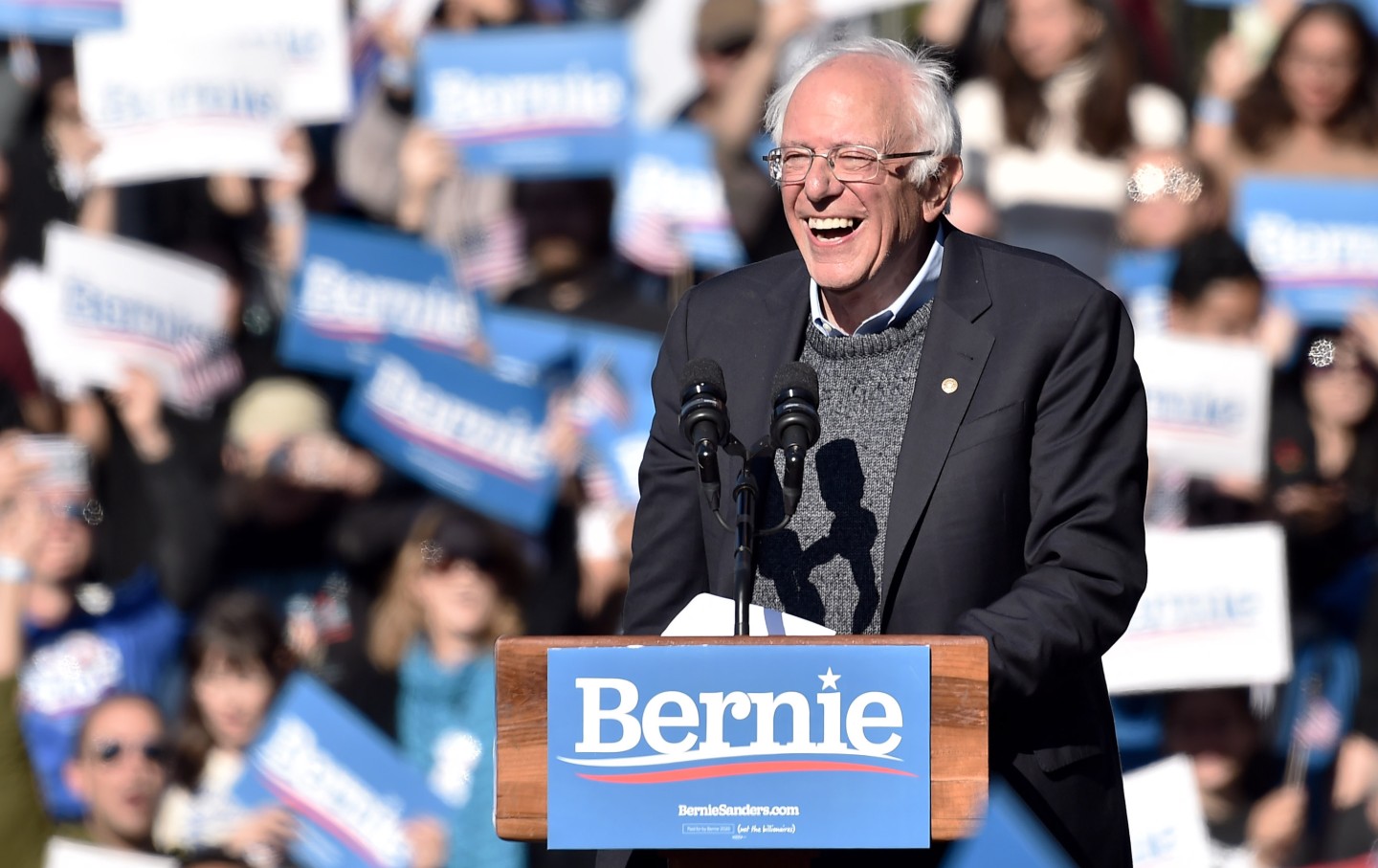
Lastly, I’ve been following the Democratic primary election—or, well, not following. I can really sympathise with the people who voted for Bernie Sanders: the DNC has pretty much turned this into a Biden coronation, and I don’t blame Bernie supporters if they decide not to cast their vote for Biden in the election. Heck, I wouldn’t blame them if they abandoned the Democratic party altogether.

Biden may or may not win against Trump; it will depend on how this pandemic evolves. At this point, though, I don’t really care. It’s business-as-usual in America, and that means crazy-as-usual.

If you haven’t done so already, you can keep following me by signing up to the subscribe form on the right. This way, you’ll be the first to know when I release something new, be it a new book, short story, or exclusive.

6 Mar 2020

Feel the Bern

Hello readers!

Today, I’m going to discuss a topic I usually can’t be bothered with: American politics. As a card-carrying European, what goes on the other side of the pond doesn’t really affect me, so why pay attention? Well, I’m going to make an exception this time—I think the Democratic nomination is really interesting. More importantly, it could have wider relevance for how left-wing parties win (or lose) against populist right-wing opponents.

Also, I have a different perspective because I’m not American; this can give me valuable insights that are missing in the debate. I’ve been treated by the NHS, to take just one example.

I’m going to structure this post into two parts: the first is an overview of the personalities, the second is about tactics. I’ll finish by discussing the issues in my conclusion. Why not put the issues front-and-centre, you ask? Well, it’s because the American Presidency is fundamentally a personality contest. You can’t win an election without understanding this fact.

The Personalities

I’m going to classify the candidates based on Donald Trump’s nicknames. I have no love for Darth Cheetoh (as some affectionately call him) but Trump is a very effective rhetorician who speaks straight from the gut. His ability to nail a politicial opponent’s weaknesses—and to embody the spirit of Middle America—is remarkable.

I’ll discuss the candidates who have had sizeable votes; I’ll ignore the non-entities like Steyer, Yang etc.

“Sleepy Joe”: I think Democrats are making a big mistake voting for this guy. I mean, I like him, and Biden is a likeable guy. But he has several critical flaws that make him a poor choice to fight Donald Trump in 2020. Firstly, he shows worrying signs of senility: he mixes up his wife with his sister, doesn’t know what state he’s in, thinks he’s running for the Senate, and said 150 million Americans were killed by gun violence. (That’s half the population.)

On top of that, he is an establishment politician implicated in the Ukraine debacle. I don’t care about the details; voters won’t either. Trump proved how good he is at eviscerating establishment politicians with Hillary Clinton. “Crooked Clinton” cost Democrats the White House, and “Sleepy Joe” might do the same in 2020.

“Mini Mike”: Only one candidate is worse than Biden against Trump, and it’s this guy. Seriously, what the hell are Democrats thinking? Never mind that progressives won’t vote for a groping billionaire. Trump is a groping billionaire himself, and as such, he intimately understands Bloomberg’s weaknesses. Faced with two billionaires, voters will pick the more charismatic of the two.

“Crazy Bernie”: Why isn’t Bernie the front-runner anymore? What are Democrats thinking? Bernie Sanders would wipe the floor with Trump. He is a brilliant grassroots campaigner; he has the money; and most importantly, people like him. He’s honest and authentic and wins people over to his side. Americans think socialism is crazy—but they agree with public healthcare, and they want college to be cheaper. The more they listen to Sanders, the more reasonable he seems.

“Mayor Pete”: Also known as BOOT EDGE EDGE. I liked him a lot—it was really promising to see a gay candidate come out of nowhere and do so well. I think Pete might have won against Trump, despite the handicap of homophobia. (It’s also interesting that Trump respected a gay man as his political opponent.)

I actually think lack of minority support was a much bigger problem for him. The lack of Black support was his own damn fault—he made some mistakes as mayor of South Bend. But I think he could, in the future, gain lots of support from Latinos; he just needs to reach out and campaign better.

It’s wonderful to think this man could plausibly have become President of the United States.

“The Phoney Pocahontas” aka Elizabeth Warren: A smart woman and a brilliant policymaker, but not a good presidential candidate against Trump. The fabricated stories about her Native American ancestry (debunked by a Cherokee genealogist) is exactly the kind of identity politics that would cost her an election. I’m glad she’s dropped out, and hope she will continue to make a difference in politics.

Tactics

Let’s talk about electability. I think Bernie Sanders is more likely to win than Biden. It’s not impossible that Biden could beat Trump, mind you, but they odds are definitely in Bernie’s favour.

Why? It boils down to two things. Obviously, Sanders can get the base out (this has been discussed ad nauseam). But perhaps more importantly, he can win back Trump–Obama voters, which data shows is the reason Clinton lost the election. He can do this by appealing to them—through his policies, through the kind of person he is—and not playing identity politics.

The data shows that racial anxiety was the reason these voters supported Trump (a “whitelash”). But since these people voted a black man for President (twice!), I hardly think Democrats should give up on them. If the left makes a positive, optimistic case for their vision of America, these voters will come back. If Democrats attack them as racist, and bite Trump’s bait, they will lose.

But how does Bernie win the nomination? The Democratic establishment has rallied around Biden. The good news is that Warren has dropped out, and I’m hoping she will formally endorse Bernie Sanders. If it takes a VP ticket or a seat on a committee, so be it. Bernie and Liz need to stick together.

I want to briefly touch on why the Democratic establishment is so keen to support Biden, despite some pretty obvious flaws. I think it boils down to two things;

  1. (This is the theory I lean towards) They’re desperate. People who are desperate, in my experience, don’t think rationally.
  2. They want to lose with Biden rather than win with Bernie, as the latter option means they lose control of the institution (the Democratic party). Psychologists who study organisations often note this kind of behaviour.

Bernie needs to show Biden’s weakness. “If Joe can’t win a debate against me, how can he beat Donald Trump?” This is is the question Bernie needs to ask voters. He doesn’t have to be aggressive, mind you; Sleepy Joe is like a deer in the headlights anyway.

Conclusion

Two questions are important in the Democratic contest. The first is: “What’s the answer to Trump?” The second is: “How does America get public healthcare?” In both cases, the answer is vote Bernie Sanders.

Pete Buttigieg made a huge mistake in turning away from the single-payer model. He asked what would happen to the 150 million Americans who have private healthcare via their employers. The answer is that all 300 million Americans would be covered under an American NHS, and they won’t have to pay out-of-pocket, and they won’t lose healthcare along with their job. (The German model that Pete proposed would be certainly an improvement over the present system, but it’s still second best. When has America ever settled for second-best?)

If Bernie Sanders makes the case for Biden’s poor electability, and champions in his Medicare-for-all policy, he might still win. I for one think it’s time to “Feel the Bern”.

5 Mar 2020

I’m finally getting published

Hello readers!

I have been busy these past few weeks, which is why I have not posted any updates here on the Magical Realm. Partly, it’s been because of the new book, Fallen Love. I’ve been advertising on Facebook, fulfilling backer rewards for Kickstarter (lots of paperbacks to send out!) and I’m negotiating the rights to the sequel with a small press.

Yes, you read that right: a small fantasy publisher wants to publish the next book! The talks are only at the beginning stage so far, and there is much to think about. Editing, design and marketing are the big ticket items; there are a million other things that go into a publishing contract.

There is a trade-off involved, naturally: the royalties aren’t as good as in self-publishing, which means I have to sell more books to earn the same. In exchange, I get editing, which is seriously expensive business (think $2000+ for a full-length novel). The publisher has a physical presence in California, which offers many opportunities—conventions, bookstores, Kickstarter rewards—that wouldn’t be open to me otherwise. Finally, I want someone to do the work for me. Self-publishing is too complicated and too exhausting.

The Curse of the Automobile

I’ve started taking driving lessons. Getting my licence will prove a time-consuming and tedious process, mostly because of bureaucracy. I can’t say I’m massively excited about it, because it’s not like I can afford a car at this stage in my life. Moreover, car transport is the cause of many negative externalities—pollution, climate change, congestion, and obesity among them.

Sadly, the reality is that we are hopelessly dependent on cars. You need to drive a car in order to be an independent adult. Even employers require it as a condition for getting a job—or the market forces you to drive a car because living in the city is too expensive.

Plans for the future

But enough about that! I have exciting plans for my writing. Getting a publisher for Fallen Desire is just the beginning; there are other promising opportunities I’m exploring. You’ll hear more about it in the coming weeks and months. Stay tuned!

3 Feb 2020

Fallen Love is finally here!

Hello intrepid reader!

I am delighted to announce that Fallen Love is now on sale! Head over to the Fallen Love page up top, or click the button below.

You can get Fallen Love as both an eBook and a paperback. What’s more, the eBook has Amazon X-Ray enabled, which lets you see useful information about characters and terms.

Thanks to my Kickstarter backers, I have raised enough money to promote Fallen Love and cover my expenses. So thanks a lot guys! This story has been a long time coming. After two publication date delays (first December, then January, finally February) it feels like a relief to finally have it out there. Read my story on Kickstarter

Next Steps

If you’re just reading this, why not head over to my Facebook page or my Twitter and stay up-to-date with everything going on. If you want to know when book #2 is out—and get a free copy of my short story, the Vampire Eirik—please sign up to the mailing list.

What I’ll be doing

I will be busy over the coming days and weeks with promotion, including guest blogging organised by the gals over at LesCourt & Vibrant Promotions. Aside from that, I will be busy with social media and advertising. The ads will start once the book has its reviews.

Wish me luck! It’s finally coming together.

27 Jan 2020

The Final 48 hours

Hello readers!

I am happy to announce we’ve raised nearly £1000 for the Kickstarter! This has been more than I expected and, to be honest, I wasn’t quite sure how to respond. As a first time Kickstarter creator, I had no idea what to expect—and nor did I know anything about Kickstarter etiquette. Thanks to the help of Dyrk Ashton (an author you should check out!) and some newly-gained personal experience, I now have a plan in place for the remaining days until February 1st.

Stretch Goals

I am announcing two stretch goals in addition to my original goal of £500. Here’s an explanation for what all the goals mean:

  1. The original goal: basic promotion. For £500, this covers the cost of the marketing professionals I’ve hired, as well as advertising on Amazon, Bookbub and Facebook.
  2. Stretch goal #1: £1000. This pays for a BookBub promotion called Featured New Releases, and makes it easier for me to sell the book to bookstores.
  3. Stretch goal #2: £1250. This pays for another blog tour & ARC reviews, and it makes the sequel, Fallen Desire, more financially viable.

Rewards

I’ve released two new rewards since the Kickstarter began. The first—the Special Edition eBook—gives backers never-before-seen artwork, and comes packaged with an excerpt from the Ark, plus secret editor feedback.

The second reward, named the Great Demon special, has two very special features: it lets you base a character in the sequel on yourself; and I dedicate the book to you! Yes, you heard that right.

Interested?

Then follow the link.

16 Jan 2020

Guest Post with Julia Goldhirsh

Introduction

Hello everyone! Today I’m co-authoring a blog post with Julia Goldhirsh, a YA fantasy & fairytale writer. We met on Twitter and decided to combine our collective efforts for a bit. Enjoy! Oh, and make sure to check out our respective blogs: Julia Goldhirsh and Alex Stargazer.

How to pitch your book as the right genre

  1. See what types of people are interested in your book. Who wants to review the book, how old are they etc?
  2. Make a list of the types of tropes you have in your book.
  3. Search on Amazon to see what other books have those tropes
  4. Ask your readers how they would define the book. See what readers say about it during beta reading.
  5. Use the template below to help get started
  6. Look for novels that seem similar to yours and that have similar tropes. How do those writers classify their books?

Age of characters: 12-18 (Typically YA or MG) Time Period: Modern (Urban), Past (Possibly historical) Genre: Science focused, magic and sorcery focused, end of the world focused, love focused, etc.

You can see a further breakdown of genres here.

To craft your pitch

Grab them with the first line- A dark fairy tale with a twist. Introduce an enticing trope- At the turn of the 20th century, a Rapunzel in a greenhouse battles an evil nymph Leave them with something that makes them want to know more- with help from a messenger with a mysterious past.

Here is another hook that I’ve used- An enchanted Rose spellbound to a greenhouse prison.

How to sell books to bookstores

Some of the main things bookstores want when looking for books are retail discounts, ISBNs, and a price on the barcode. This makes selling your book easier for them and will make your book an easier sell in the long run. Here’s what I’d recommend so you can have those things for the bookstores.

  1. Ingram Sparks- Get on Ingram sparks. No seriously. Do it. It will make you a lot more palatable when you approach bookstores.
  2. Bowker- Purchase a barcode from Bowker and have your cover artist put the barcode on there for you. You can get your ISBN there too.

Alright, so now that you have that out of the way, here’s what you can do to reach out to bookstores. Note that this is not a one size fits all approach, but this worked for me.

  1. Library- Submit to your local library.
  2. Bookmarks and business cards-Have some bookmarks made and ask your local bookstores if you can give them bookmarks
  3. Barnes and Noble- Fill out the forms they provide on their website. They even offer the option to get your book reviewed through their website.
  4. Books a Million- Fill out the forms on their website. (They do not accept Print on Demand titles).

One thing I did was that I had some bookmarks designed and printed through Vistaprint. I contacted some local bookstores and cafes to see if they’d be interested in taking the bookmarks. Often when I went in a customer or two would ask about the book, I’d give them a short pitch and the customer would express some interest. This resulted often times in the buyer purchasing the book off Ingram.

If you’d like to see more of my content, you can sign up for my mailing list here.

Below are some pictures of my book in the library and on the bookstore shelves.

Alex’s Suggestions for Getting into Bookstores

To begin with, I second Julia’s suggestion regarding bookmarks, and this is something I will be doing myself. Bookmarks give you physical presence, author branding, and credibility. But let’s not forget the most important element: pitching your physical book to the manager. This is exactly what I did at WHSmiths, and it immediately grabbed the attention of the manager. At Waterstones, I was unable to meet the manager in person—and when I pitched him via email, it didn’t work.

Another suggestion, which won’t work for everyone, is Kickstarter. I have been able to successfully meet my funding goal thanks to the awesome folks at Kickstarter. What does this have to do with bookstores, you wonder? Again: credibility. It’s easier to convince a manager to buy your book if you can prove that you raised $1000 (say) for your crowdfunding campaign.

Your author branding should work to support your message—I intend to display the Kickstarter logo along with Fallen Love imagery in my bookmarks, for example.

Regarding which company you use to print your books (Amazon, Lulu or Ingram) this is a tricky question and one which I haven’t figured out yet. Julia thinks you should use Ingram, which is the traditional choice for getting into bookstores. But combining Bowker + Ingram has an entry cost in the hundreds of dollars, and that’s money that can certainly be better spent. Amazon has the best prices—but branding might be an issue. Lulu’s prices are too high, for paperbacks at least, to be realistic. Personally, I’ll plump for Amazon.

How About Genre?

This is easy if you’re publishing something in an already well-defined genre—epic fantasy, for example; thriller; or cozy mystery. Things get harder if you’re writing something a bit more unconventional like what me and Julia are writing. The general advice—shelve your book in the sub-genre of the main genre, so on Amazon that might be fantasy and then “LGBT Fantasy”—works if you know what your main genre is. It may be that you need to categorise your book in more than one genre. This is a case of experiment-and-see-what-works.

I learned this the hard way for Fallen Love. I always knew that, at heart, the story is urban fantasy: the young adult characters, the worldbuilding, the tropes—it’s the stuff of Cassandra Clare or Lauren Kate or (heck!) even Twilight. Yet I hoped it would also appeal to LGBT and Sci Fi readers. The jury is still out on the SciFi part (I don’t have a large enough sample of Sci Fi readers yet) but my experience with LGBT readers is that it’s more often miss than hit. As much as I love the relationship between Mark and Conall, the book has too much complex worldbuilding to appeal to M/M romance readers. For a reader who diets on contemporary gay romance, demons, witches and 26th century Europe are just too much.

You can guess I’ll be heavily promoting Fallen Love as an urban fantasy book before anything else.

Conclusion

So how does the intrepid author go about getting their book into a bookstore, and hopefully selling a bunch of copies? Both me and Julia agree on the business fundamentals: you need a good price and discount for your book; a well-chosen target market; and you should a physical product that communicates your brand. The author’s personal presence is often important as well.

If you have raised money in a crowdfunding campaign, or have already sold a decent number of books online, this is something to emphasise.

Julia Goldhirsh is the author of Spellbound, a fairytale spin on the classic young adult fantasy story. You should follow her on Twitter and Facebook or her mailing list to get the latest on her new books, special offers, and cover reveals.

Alex is an author of some excellent LGBT Urban fantasy books with hints of romance. His second novel is called Fallen Love and he has a scheduled publication date of February 1st 2020. You can check him out on www.alexstargazer.com and follow him on Twitter or Facebook to be the first to get updates on cover reveals, new books, and promotions.

10 Jan 2020

Please upvote Fallen Love on Reedsy!

Hello readers!

In a short break from my Kickstarter coverage (which is going quite well so far!) I would like to ask for your help on something different today. I have submitted Fallen Love to Reedsy Discovery, a website that specialises in promoting self-published books.

To feature on their newsletter, I need you to go and upvote my book. Just follow this link: https://reedsy.com/discovery/book/fallen-love-alex-stargazer

Given that their newsletter readership is fairly significant, this could really help! I have already received upvotes from the website founders, so let’s follow their example.

Thank you.