Showing posts with label Author Advice. Show all posts

12 Mar 2017

Guest Post: Advantages of Being a Teen Author

Hallo allemaal! I know I have been dreadful in keeping the Magical Realm updated, so today I am bringing you something new: a guest contribution. I will be writing a post of my own in the near future, though, don’t you worry.

Guest post by Molly Fennig, teen author of the YA thriller INSOMNUS and blogger for mollyfennig.com.

Writing a book is something many people dream of, and few actually accomplish. Some have already achieved that goal as teenagers, though, including Alex and I. When most people hear that I wrote a book during my junior year of high school, they usually respond with, “Wow, how did you have time for that?”

The answer is, with volleyball and homework and clubs, I didn’t just happen to have hours of time I could use to write. I did, however, find ways to work writing into my schedule.

I wrote on the bus on the way to school, or at least thought about what was going to happen next in the story. Also, I set aside at least thirty minutes a day after homework, and before anything else, to write. This meant while I didn’t totally give up TV, I definitely wasn’t watching regularly, just as I wasn’t spending as much time reading for fun or watching movies.

When I did read for fun or watch television, though, I was sure to capitalize on the experience: taking character and actor names for my own stories, looking for what made realistic dialogue, and getting new plot ideas that made me excited to continue my story.

Similarly, I was sure to capitalize on the resources I had as a high schooler to strengthen my writing. I used the same techniques for peer reviewing in English as I did for editing my novel. Annotations and close reading, while usually used for literary analysis, helped me determine plot holes and awkward wording in my manuscript. Analyzing other authors helped me hone in on my writing style and discover what I liked in the books, and, conversely, determined what I incorporated into my writing.

Other classes helped me grow as a writer besides English class. Spanish taught me almost as much about the English language (such as parts of speech and faulty predication) as it did about Spanish. Psychology gave me the idea for my novel, INSOMNUS, and the scientific explanations for the supernatural abilities my characters had. Of course, some classes, like math, had limited effect on me as a writer, although I suppose without it, I wouldn’t have been able to number my chapters. (Although I could’ve just made them chapter names, so really, who needs math?)

So, if you’re a writer in high school or college, what can you do to take advantage of the resources you have?


  1. Take writing classes. This may seem obvious, but do it!
  2. Take compelling classes that have nothing to do with writing, such as engineering or cooking, to give you ideas for characters, plot, and worldbuilding.
  3. While walking to class or sitting in the library, listen to how people talk so you can write more realistic dialogue. Listen for things like how often they day what they really mean and what kinds of words they use.
  4. Maximize downtime. Whether it’s on the bus, like me, in the few minutes before class starts, or as a study break, take the time when you can to come up with new characters, outline your plot, or just to write.
  5. Join a writing/reading club or schedule in time. Especially in college, it can be easy to go weeks without reading fiction or having writing time. By scheduling it in, either weekly or daily, you’re more likely to end up doing it. Plus, joining a club or reading with friends can be a fun way to make a solitary activity more social.
  6. Review other people’s work. Even if it’s just looking over a friend’s essay, it can help you refine your editing skills. Plus, it’s always easier to edit other people’s work, so it’s a great place to start.
  7. Find people to review your work. Whether it’s the same friend whose paper you edit or someone else, there are likely plenty of avid readers who would be willing to look over a chapter or two, at least, of your book, and see errors you missed after having read the manuscript four hundred times.
  8. Reach out to teachers in the industry. I wouldn’t have published my book without help from my creative writing teacher, who is a part of the writing and speaking industry, so reach out for advice or to be connected to other people who can help.
  9. Even if it’s only for a few minutes, journaling can be a great way to collect information (events, feelings, ideas, names) for future stories as well to help you write stream-of-consciousness. It’s also a good tool for writer’s block.
  10. Use social media/screen time for writing instead. The same goes for any time-wasting activity you normally do. While you don’t have to give it up completely, limiting your time on such activities can free up a fair amount of your day. That being said, when you do go on social media or watch television…
  11. Use social media/screen time for inspiration. Use pictures people post for characters and settings or use social media to connect to other authors and grow your platform.
  12. Make school assignments lessons in writing. Take what you learn about writing essays and expressing your thoughts coherently and apply them to your writing. Use research skills for research papers to get background on your story. If you find you work better with deadlines for school projects, give yourself writing deadlines. Use ideas from psychology, sociology, and economics to give your characters realistic motivations.

If you liked this post, check out my blog for writing tips, book reviews and more, mollyfennig.com, and check out my book, INSOMNUS, on Amazon and Barnes and Noble.

22 Jan 2017

Writing a book at 14

Hello everyone!

Since I am terribly busy with my Dutch lessons, various administrative tasks, and of course my writing, I have decided not to write any original work at present. However, the piece below was originally published in the university journal, Scriptus; and I believe you will find it to your great interest...

When I tell people I wrote a book at 14, it would be an understatement to say that I get a lot of responses. But beyond the look on people’s faces, writing the Necromancer changed my life in many deeper (though sometimes subtle) ways.

Firstly, allow me to address the obvious factor here: commitment. Writing a 108,000 word high-fantasy book is not something you do on a whim. Indeed, it took me over six months to complete the first draft—a feat that required writing multiple hours per week—and a whole 18 months to get feedback, edit, seek agents, do more edits, and eventually hire professionals to do the artwork.

This leads me onto the second obvious question: motivation. Why, exactly, does a fourteen-year-old undertake such a quest? In my experience, laymen often draw on analogies with entrepreneurs: perhaps, they think, I wrote because I want to build something. Maybe I want to make the world a better place. Maybe I’m just in it for the money, or the pleasure of throwing down a 500 page book and saying ‘I wrote that.’

But this is only a small part of the reason I write. To understand my motivation, you need look a bit deeper, and trace the origin to my love of reading. I have always loved reading, even from an early age, and this was particularly true of the years just before I began writing. A transcript from the school library showed that I read about 400 books between the ages of 11 and 14.

The old adage is true: behind every writer there is a profligate reader.

So how did my love of reading affect me? It is safe to say that I became enraptured by the world of fantasy. Like the children in Narnia, I had opened the wardrobe and found a whole world waiting for me. Eragon and Northern Lights kept me up at night. I saw myself in their shoes: I fought urgals on the back of a dragon; I met angels; I fought dark magicians and consorted with vampires.

I was, in truth, smitten by the occult. My fascination was endless. It seems almost inevitable that I came to write about it; that my ideas grew, morphed, and took a life of their own.

One grey October afternoon, I began writing. I believe the necromancer compelled me to write that day; that the curve of his arrogant jaw, the icy power held in his ‘cold orbs of sight,’ all but forced me to put him down on paper.

Laymen often ask writers where their inspiration comes from. This, I am afraid, is the best answer I can give you.

The first few chapters I wrote were not worth the paper they would have been printed on, however, so I had to rewrite them from scratch. This is true of nearly all first time writers—you can blame it on the fact that writing fiction is… hard. It is difficult for a non-writers to understand just what kind of challenges writing presents: the elaborate art of writing itself; the magnificent difficulty of capturing whole personalities, often in few words; the intricacies of plot—all to name a few.

The rest of the book was a journey. I followed Linaera—apprentice mage and unwitting protagonist—through her journey into the Northern Mountains. I watched on as Nateldorth, Great Mage, uncovered dark conspiracies in the capital, Dresh. Most of all I followed the necromancer. I was witness to him: to his betrayal, his descent into madness, and his ultimate redemption.

Books are journeys. The journey of my book was in a way my journey: where my characters struggled, I struggled with them. For them it was question of facing up to existential challenges. For me it was knowing their motivation, and building all the twists and turns of plot that made up their lives.

Writing the Necromancer was often a pleasure. I liked the dark, unexpected turns of the plot; the characters’ inner lives; and most of all, I enjoyed writing in the world of Arachadia. I loved the towering mountains, the vast, sprawling forests; the great stonework of the mage buildings and the fine craftsmanship of the wooden cathedrals; the world of dormant dragons and powerful magics.

Of course, writing the Necromancer was often a challenge. I was young, and devoid of experience. I often struggled to write fluently—it took much work to correct the early mistakes. It was as if a vast realm had been entrusted to a young king; a king with many ideas but few ways to actually conquer.

But conquer it I did. Perhaps I did not quite succeed. Perhaps there are other worlds yet unconquered—other vast and distant places full of promise. But writing the Necromancer was not the finishing line; it was only the first milestone of a long journey. I do not know what dragons still slumber in the path I am taking.

Nor does it matter. My advice to my younger self—as well as to other would-be writers—is perseverance. Many monsters lie in wait (some of them are called publishers, critics, and yourself) but the treasures they guard are beautiful.

2 Nov 2016

The Pierian Spring...

Hello readers!

Previously, I released the new cover of the republished edition of the Necromancer, along with a blurb and prologue—to tease you. I did not give a firm publication date; I said it would be soon, very soon.

You see, I have sent out a review request to several reviewers, and will be sending out several more over the coming days. I hope to gain a fair number of reviews, and high star reviews if possible; these are important for the success of the book. I am therefore hoping to have the new Necromancer out by the 10th November, possibly later—it depends on the reviewers. (Reviewers, as you can imagine, are as fickle as writers.)

In any case, while you are still waiting for the book, you can still follow the many intriguing writings here on the Magical Realm. Up today is a piece I consider particularly interesting: it is about the rules of magic in fantasy, and the important consequences that it brings for plot.

Too Much Knowledge is a Dangerous Thing

Going back over the Necromancer—by editing it, rewriting it, and thinking how I might remarket it—it occurred to me that the greatest strength of the book was that... one could never really tell where it would go. Every encounter was a mystery; it was always possible for something to go wrong unexpectedly.

Indeed, ‘things going wrong unexpectedly’ are perhaps the most compelling element of any plot. It’s what keeps your reader in suspense—it’s what surprises them and makes them want to read more. If the reader knew the outcome of 90% of encounters... well: what would be the point? No one would care to read the book.

And this is where the rules of magic systems become important. In a system where the rules of magic are clearly defined and unbreakable—then the outcomes of magic battles are clearly defined and unbreakable. And thus, as above, such battles become boring.

So what can the intrepid writer do? There are a few options:

  1. Keep the magic system deliberately vague.
  2. Make the magic system inherently uncertain. For example: the principles of quantum physics are immutable, but at the same time, uncertainty is inseparably part of quantum physics. A similar thing can be done with the principles of magic systems.
  3. Let the magic system have clear principles, but don’t reveal them all to your readers—leave them with just enough to try and puzzle it out.

There are some problems associated with all of these approaches, but (2) and (3) are—in my experience—superior to (1). The issue with the first option is that, by making your magic system vague, you end up with a world that doesn’t have any rhyme or reason to it. Why did x lose a battle to y? How does the magic system work? (Your readers will be wondering about this, trust me.) And most of all: what are the limitations of magic? Can mages move mountains or just pen knives?

The second and third options are superior, though not entirely perfect. The second option is attractive if you can pull it off—but it requires some quite complex magical principles, and may be difficult to visualise and implement.

The third option is what I took with the Necromancer. I was able to create a world with clearly delineated roles of magic, limitations, and relative power levels. At the same time the reader was always left in suspense—because the magic system was complex and never explained in full detail.

The take-away point here is that, as is often the case with fiction, you need not tell the reader everything. Sometimes, too much knowledge is a dangerous thing. Sometimes—a little ignorance can go a long way.

24 Nov 2015

The Length of a Story

Hail readers!

Previously, I wrote on matters of writing; specifically, that concerning how much detail is too much detail—especially in sex. To continue from my literary deliberations, today I address another oft-troublesome aspect of writing: length.

Writers often feel anxious about the length of a book: will I write enough, the more inexperienced among them wonder; what if I write too much, think others. Both, you may notice, assume there is particular set length to a story—but is this true?

In a manner of speaking, yes. A sweet romance tale is best when told with strictly the detail and length required to capture the lover’s heart; no more and no less. A sweeping epic fantasy novel, on the other hand, or a thought-provoking scifi masterpiece—they need length. Length is part of their charm. They wouldn’t be what they are were it not for all those dialogues on philosophy (what is knowledge? What is moral? etc.) or on science, or on the architecture of the world—a particular favourite of ours.

But so too is there a degree of… flexibility, in length. Perhaps the epic fantasy novel may choose to employ language in a manner befitting of 18th century writers—as is indeed traditional. Or, perhaps it may not. Maybe the scifi masterpiece could do with missing a particularly technical discussion on the means of propulsion of the spacecraft. And maybe that romance novel might need a bit more side-character development or plot.

So how does one determine a suitable length? To answer that, one must go back to the key principles of writing.

The Key Principles

All tales are unique, but I believe certain key principles are universal among them all. These are:

  1. The struggle. A significant philosophical discussion can be had here; but as far as we, the writers, are concerned: a tale must have a struggle. It could be the protagonists finding what lies in their heart, and the struggle to find love. It could be a struggle to defeat a disturbed but immensely powerful necromancer. (Did anyone mention the Necromancer?) Or it could be a struggle for life—a struggle to reach the spaceship that will bring you to salvation.
  2. The fight. How do the protagonists find love? How is the Necromancer vanquished? (Not telling!)
  3. Resolution and aftermath. If the duo (or trio?) do find love… what happens after? If the Necromancer is indeed vanquished… what will become of his apprentice? And so on.
  4. Life etc. What happens in the meanwhile? And why, oh why, is it important? It could be to bring depth to the characters; it could be to elucidate on the finer details of a world. Or it could be there simply because… stories are like that.

Now, the above is probably incomplete. And addressing even these basic principles would require an entire book devoted to the subject—such is the complexity of writing.

But for our purposes, let’s consider these principles specifically with regards to length.

How Long is Too Long?

Without doubt, the first three principles make up the core of a tale; you cannot remove those. You can shorten them, perhaps, or re-write them—but you cannot remove them.

Number four, on the other hand, is where the grey truly lies. Number four makes up the bulk of a story; why? Well—because it’s lengthy by its very nature, and important in the workings of the tale. But: it can be cut down.

However, this is not to say that one ought necessarily do so. My scenes in the Necromancer that pertain to, for example, the workings of the mage schools; or, in the Ark, the scenes relating to the protagonists’ education and life more generally—these are important in developing the world and the characters.

Still, let’s be honest: it’s not as if the exact reasons for why fireballs break up beyond ~500m or why certain bullets are only used rarely make up some key idea.

No. The question that a writer must ultimately ask themselves is rather: how far do these scenes serve the first, second and third principles? For these scenes do, in fact, possess a peculiar derivative quality. In some ways, principle four is an extension meant to serve the other three.

Language

A final concern lies with language. Even beyond a large number of subplots or backstory, the workings of language can extend or contract a book’s length to great degree. Consider:

The city known as Trebon by those who inhabit its boundaries, or as Trabean-bennevont by those that made its ten foot thick walls by a hundred feet high, is majestic indeed. The Elves known as the Druiadath had named it ‘the Forest of Stone and Blood’—and as for why, well: that is no trouble for any man with half a sight to see.

For a thousand years the city had stood firm. A thousand by thousand soldiers had dashed themselves against its walls; all had perished. It is said that in the city’s catacombs their bodies lie entombed, for purposes that only the city’s necromancers know; it is said, also, that in the city king’s throne is made from the bones of some terrible beast, summoned centuries past.

The Black Beast of Denar—if it is indeed that beast which the legends speak of—had torn ten cities and a hundred towns to pieces. It had turned thousands of soldiers to bloody ribbons; but even it could not flout that impregnable gate.

But the force that rules it now had broken the gate. That feat had been performed by Selein, the city’s new ruler. He had used nought but his own power.

They say the sky went dark as raven’s wings; they say that some strange phantasmagoria had stolen into the city’s domain; they speak of dead men that walked, of mothers turning against their babes, and of a strange blackness that cut through the Great Gate as if it were no more than string.

They say Selein opened the gates of Hell.

The above is large enough to occupy a page; and yet Trebon could have been described in perhaps half that, had I truly been willing. Indeed, some writers can take the above—which is merely very detailed and verbose—and turn it into three pages, by festooning it with flosculations and asides.

And to some degree, fantasy works on that. It likes it when you describe the world with many names, according to many people, and through the ages of history. It loves legend (e.g. the Black Beast). And it also likes this kind of detailed description—of ‘dead men that walked, of mothers turning against their babes,’ and so on.

But the kind of writing above would be less appropriate for a thriller or a romance. And, even in fantasy, things can be taken to their extreme:

There was Eru, the One, who in Arda is called Ilúvatar; and he made first the Ainur, the Holy Ones, that were the offspring of his thought, and they were with him before aught else was made. And he spoke to them, propounding to them themes of music; and they sang before him, and he was glad. But for a long while they sang only each alone, or but few together, while the rest hearkened; for each comprehended only that part of the mind of Ilúvatar from which he came, and in the understanding of their brethren they grew but slowly. Yet ever as they listened they came to deeper understanding, and increased in unison and harmony.

And it came to pass that Ilúvatar called together all the Ainur and declared to them a mighty theme, unfolding to them things greater and more wonderful than he had yet revealed; and the glory of its beginning and the splendour of its end amazed the Ainur, so that they bowed before Ilúvatar and were silent.

Then Ilúvatar said to them: ‘Of the theme that I have declared to you, I will now that ye make in harmony together a Great Music. And since I have kindled you with the Flame Imperishable, ye shall show forth your powers in adorning this theme, each with his own thoughts and devices, if he will. But I will sit and hearken, and be glad that through you great beauty has been wakened into song.’

Then the voices of the Ainur, like unto harps and lutes, and pipes and trumpets, and viols and organs, and like unto countless choirs singing with words, began to fashion the theme of Ilúvatar to a great music; and a sound arose of endless interchanging melodies woven in harmony that passed beyond hearing into the depths and into the the Void, and it was not void. Never since have the Ainur made any music like to this music, though it has been said that a greater still shall be made before Ilúvatar by the choirs of the Ainur and the Children of Ilúvatar after the end of days. Then the themes of Ilúvatar shall be played aright, and take Being in the moment of their utterance, for all shall then understand fully his intent in their part, and each shall know the comprehension of each, and Ilúvatar shall give to their thoughts the secret fire, being well pleased.

—J.R.R Tolkien, the Silmarillion.

The above is certainly beautiful, but Tolkien takes so many pages to say what may take but paragraphs that, truth be told, the Silmarillion was only published because it was written by Tolkien.

To Conclude

Ultimately, the length of a book—or, should I say, the ideal length of a book—depends on genre and on the tale’s personality. Some fantasy works, such as for example the Hobbit, are quite fond of the embellishments of writing and the details of the imagination; others, like—say—Prince of Thorns, are rather less verbose.

To really address the question of length, one needs two things. Firstly, one must understand one’s creation. And secondly: one must consider how far the language, or the fourth principle, actually contribute to the three key principles.

Anyway: I believe I have addressed this question as far as it is possible for it to be addressed. I shall be back with more news on the Ark—which has thus far accrued 200 pages—and will also write on a topic of current affairs.

Until then: may the stars be with you…

21 Oct 2015

On the Bourgeois Novel and the Ark

Hail readers! You may have observed that I have written a great deal on politics (and political economy) as of late; these concerns are however secondary to the point of this blog, which lies with literary matters. It is also fortuitous that a matter in the Ark has come up which merits attention. In complex terms, it concerns the nature of the characters and the merits of intellectualism.

In simpler terms: the protagonists are not ordinary teenagers. They live in a world that is on the brink of collapse, and yet on the apogee of human development. Their language, mannerisms and intellect is at once both typically teenage and vastly beyond the purlieu of many adults. They are also typically bourgeois characters.

‘But Alex: shouldn’t teenagers be more like the ordinary, and less like the creations of an armchair philosopher?’ you ask.

And that would be the crux of the question, dear reader. But allow me to make a case for the armchair philosopher.

The Ordinary versus the Extraordinary

Ordinary characters appear to be in vogue, in some literary circles. There appears to be a belief that, the more ordinary the character, the better readers are able to relate to relate to them and the more they will empathise.

This is rubbish.

Empathising with a character is an act dependent upon a writer’s ability to instil emotion and portray characters vividly; believing that a more ordinary character will permit a closer connection is, to be frank, lazy writing. The whole point of a novel is not to be ordinary; not to be trapped in the same taedium vitae and mediocrity that befalls so many.

The power in a novel, the magic, lies with characters that are both extraordinary—and in whose shoes you may walk in. It is the writer that brings the reader into the characters’ mind; it is the writer that makes their struggles their own, and their emotions felt as truly as one’s own.

But nor is this to say that a character must be made into something that they are not; that they ought be exaggerated or subject to the vagaries of market calculations. A character is a character is a character, to paraphrase Gertrude Stein. Some characters are ordinary; others extraordinary. A good novel (usually) has both.

A Very Bourgeois Novel

The Ark, as I have said, also happens to be what is known as a ‘bourgeois novel’. It does not follow ordinary people. Conall, for example, is the son a of Minister; Casey’s uncle is an astrophysicist. Not only are they not-ordinary, but so too do they belong to a particular social class.

A great many an essay has been written on the matter of social class. Certainly, the 19th century Marxist account—of the workers (the proletariat), and the owners of capital (the bourgeoisie) as two distinct entities in contradiction—is one that struggles to fit today’s, or 22nd century Cork’s, ideas of class. The capitalists still exist: Casey’s mother is the owner of a major corporation.

The workers still exist. They are the people who work in supermarkets, as cleaners, or even lollipop ladies.

But many people seem to be somewhere in between. Casey’s uncle is a researcher; what of him? What of the teachers, or the programmers, or any of the other professional classes? Are they petit bourgeoisie? Evidently not—for Casey’s uncle is hired by a university, not being himself an owner of capital.

But Casey and Conall belong to what may be termed ‘the modern bourgeoisie’. These are the intellectuals, firstly and foremostly: teachers, researchers, engineers; those involved in professional and mentally complex work. They are also present in wealth, yes, but while wealth may be correlated—it is not the defining factor.

To employ a modern example: Nigel Farage is a very rich man. So is Donald Trump. But they do not make up the bourgeois, or—more accurately, I should say—the aristocratic class. Not only do the lack intelligence (both emotionally and technically, if not financially) but they also lack other features of the aristocrat: manners, charisma, eloquence—even such things as honour, or loyalty.

Perhaps I ought call the bourgeois novel the aristocrat’s novel. Yes: that would be more fitting, I believe.

Conall and Casey are aristocrats. They are not ordinary, not people you might bump into on the streets. And that’s okay. Good novels require extraordinary characters; and ordinary characters are not necessarily more relatable, or more valuable artistically.

Now, I must leave you. Chapter Six is a-written; the Ark has now over 100 pages; and I have a rather important plot point to address…

11 Jan 2015

Behold! The Master is Back

Hail, oh reader! I—Alex Stargazer—am back; and I’ve got a lot to announce, so stick with.

What Ya Been Doin’, Alex?

I’ve been in Bavaria. If that (for whatever reason) don’t ring any bells, it’s because it’s a part of Germany. The southern end, to be more specific. It’s quite interesting, really: it has a distinct subculture with, for example, unique architecture featuring a lot of wood, big houses, fireplaces...

Basically, it’s everything you’d expect of the quintessential European mountain country. It’s even got great sausages (don’t get me started...) and even has a wine growing region or two.

Most importantly for the burgeoning tourist, however, is the snow. I’m glad to say there was plenty of it, even if it did come a little late.

But: let us move on. You don’t read this to learn about German curiosities, do you? (Psst: they do nude. Watch out!)

Moving On...

Aside from surreptitiously peeking at unfortunate German guys, Mr Stargazer has also been busy setting up a blog tour.

Courtesy must, of course, be given to Sage Adderley: her no doubt tireless efforts will help bring the Necromancer to several blogs in the upcoming 8 weeks. To start off, there will be an interview tomorrow on Book Adventures with Emily. Since I am a possessive old soul, I shall be hosting this interview with myself here too—but don’t worry: she asks the questions!

In addition to this, I—ever the determined writer—have written a report on my business situation... and marketing efforts. The report will not be released to the general public (that’s you, in case you were wondering); but expect to see a few posts outlining my experiences—both firsthand and through other writer friends—on all things promotional in this strange world.

Finishing Off

‘Alex—aren’t you a bit rambly today? And don’t you have another essay to bore us with, or something?’ I hear you ask.

Fear not: I will a have an essay to bore you with soon. I’ll also have poetry awaiting, so you can self-reflect on how sad you all are :)

Until then, keep reading. For as I say: dark dreams give no rest to wicked souls...

27 Oct 2014

The Necromancer... In Print!

My book is in my hands. I would say it’s my baby, but that would be silly. It’s a book about flying zombies and centenarians with God-like powers—it’s hardly the kind of thing you’d call your baby. (PS: it’s my baby.)

Anyway, I’ve got some photos for you to look at. They’re not very good (I’m a writer, after all) but I think they’ll do in a pinch.

I’m also going to give my humble opinion on the quality of Lulu’s printing.

But, the photos!

Mr Stargazer is a Very Bad Photographer (Yes, He’s Said that Already)

On Lulu’s Print Quality

On the whole, suprisingly good. The pages are’t too thin (a common complaint with ‘budget’ printing), the construction feels solid, and there are no misprints or washed out ink—a problem I regularly experience with mass-market paperbacks. It’s also surprisingly heavy: whether that’s a good thing, or not; I don’t know. Perhaps I shall ask Lulu support.

Is the Printer Finnicky?

Yes. All printers are finnicky to a degree (no printer wants to make thousands of books with critical flaws, even if it isn’t their fault) but Lulu’s seems particularly egregious. Here’s what happened: LibreOffice (my word processing/quasi-DTP program) can’t embed OpenType fonts as OpenType in a PDF; instead it embeds it in the format known as Type-1, which tend to be quite basic—and problematic. I’m not sure if they prevent good printing outright (I can get my home printer to do it) but it does tend to make printers nervous.

What’s faux pas about Lulu is that their printer only gives general "Font error" type error messages—it doesn’t tell you which specific font is making it complain. This was so problematic, in fact, that it took 3 days to eventually figure out why it wasn’t printing. Make no mistake: the self-publishing biz ain’t easy.

How Do You Feel Alex?

Authors often speak of how it feels to get their first physical book. Euphoria, excitement and giddiness are the most commonly cited emotions. I didn’t expect to feel that, and I don’t. My dreams are bigger than that. And anyway: the idea of trying to sell it en-masse is... pretty daunting.

That said, I do feel a certain... satisfaction? Closure? Something like that. I’ve reached the end of this road. But there’s still plenty more to go. Plenty more monsters to slay, magic to be casted, and dreams to be made.

This is just the beginning.

22 Aug 2014

Why I Followed my Dreams, and the True Cost of Self-Publishing

A few days ago, I drafted my budget and wrote up the basics of my marketing plan. When the current sum came up, I wasn’t at all shocked; in fact, I was pleasantly surprised. Having made a few hard decisions, I was looking at £660 to effectively bring to market; previously, that figure would have been around £1200.

For those not in the business, this can sound like a lot. But rest assured: it isn’t. Because of some hard decisions, I can get away with spending less than most successful self-pubs—and certainly a lot less than what your typical publishing house pays. (Hint: it’s usually more than £2000, for shorter books than this. Obviously, it varies; but I’ve heard typical figures quoted in the £5000 area for this.)

Some of the decisions that had to be made included editing. At the low end, it would have cost me £650–800; but more likely it would have cost me something like £1200 (to properly work one-on-one and collaborate). I have seen editing firms charge in excess of £2000 for this, and some even more (the latter was a questionable proposition though...)

Editing is considered a necessity for most works. Certainly, it would have improved the Necromancer and given me some much deserved help.

Unfortunately, it was not something I could realistically afford. I have a fortuitous sponsor right now—my grandfather—but since he has worked and continues to earn in Romania, I cannot expect to ask large amounts of money from him.

Let’s put it like this: for every bread you can buy in the UK, you can get five breads in Romania.

And publishing is a risky business. While I don’t seriously believe I can’t sell at least 3000 books—a writer must believe to succeed—it is nonetheless a risk involving non-trivial amounts of money.

‘But Alex: why didn’t you go the more affordable editing route and do all the marketing yourself, plus some of the design?’

It is ultimately a question of value. Editing will improve my sales outlook in the long term—and even in the short term it may pay off—and it will have the priceless value of making my book the best it can be.

But I would end up with a great book nobody will find. Through this method, I can both save money; and I can have a good book people will find.

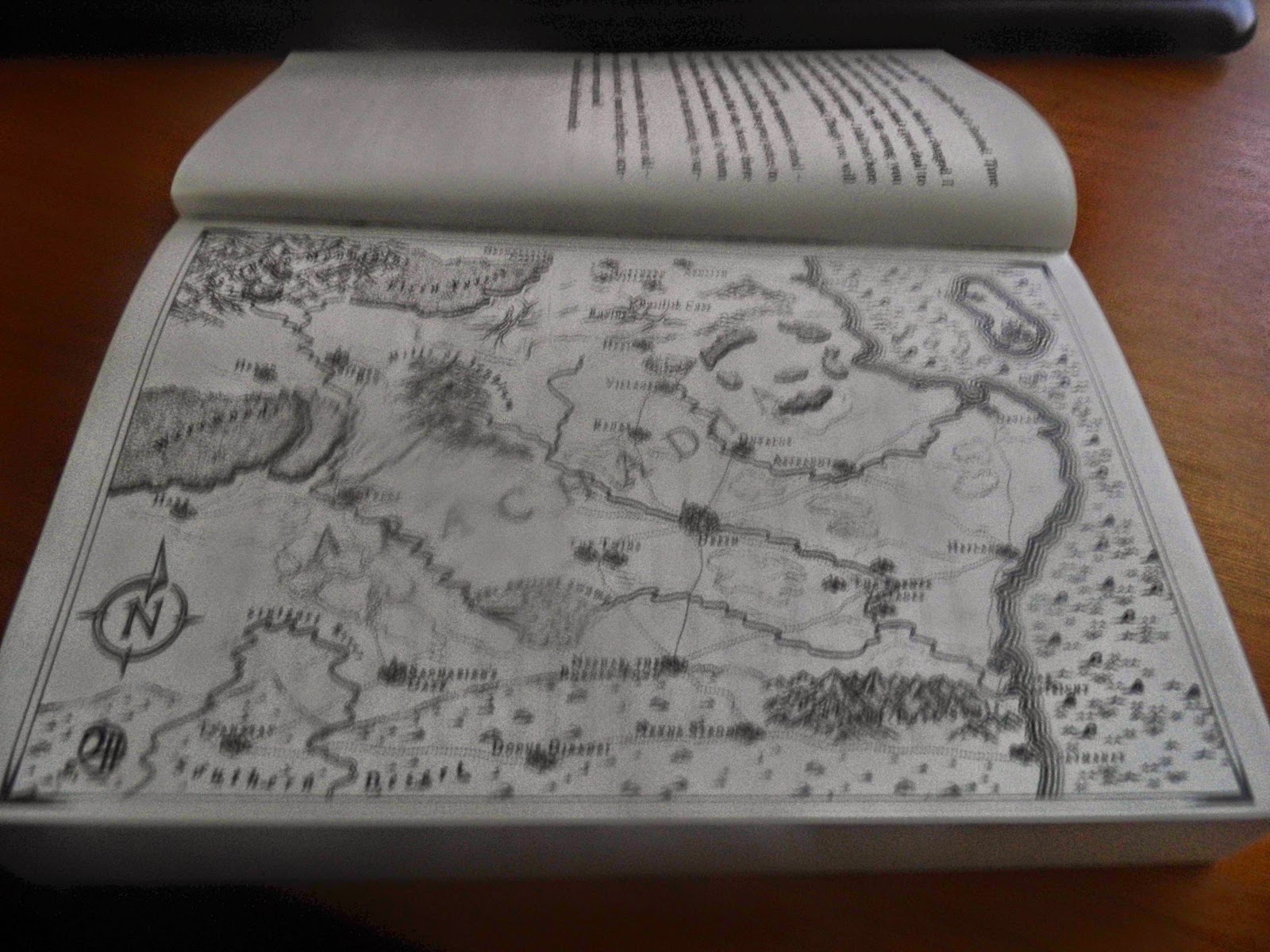
Nearly half of my budget will be spent on marketing—this will involve hiring a professional and possibly buying some ads (still playing with the possibilities). The other half is concerned with design. I am purchasing a print-ready cover, plus promotional art; in addition to this, I am going to hire out an illustrator for a map (stay tuned!) and also likely buy better wallpaper for this blog.

(I’m thinking of getting an Extreme Blog Makeover...)

Some of these expenses sound frivolous, but upon closer thought you will realise this is not the case. A good cover is a requisite for selling books in real numbers. As it is, there are higher end artists out there; though, unsurprisingly, they charge too much for me at present time.

Promotional art is also very important.A key part of my marketing is going to be physically done by me. I am going to work with libraries, bookstores, and I may even do a school assembly. But to that, I need two things: physical books, and something to tempt passing readers.

A good blog appearance isn’t really important in the short term but will build my name in the long term. And as for the map, well—it’s useful to understanding the book, which means it improves my product. (Yes, my book is a personal work of art but in business terms it is a product.)

So there you go: publishing—even done with saviness and some compromises—isn’t a cheap proposition. To really sell books self-pubbing, you will probably need to pay something in the order of £2500+ for this. If you want to make mega-bucks, well: Little Brown and co. spent about £150,000 marketing Elizabeth Kostova’s the Historian—which went on to sell two million copies.

(Quickly opens up Wikipedia... we can’t be wrong on this Alex... these readers of yours are too clever for their own good...)

And apologies for not posting in so long. I have been busy getting a bank account to fund my endeavour, and still need a UK bank account in addition to an NI number, US tax number, and possibly a pair of ISBNs (I can get them free from Romania’s ISBN office).

I have also received my GCSE exam results. They’re good, but can be better. (I do have a lot of them, and I did move in the middle of year 10 and had to catch up on half a year of Drama.) That said: I will probably request a remark for two of them—one is close to a grade boundary, the other looks suspiciously low—and may resit one RE exam in order to get a top grade.

Enough about that, though. I have started to see a terrible vacuousness in all of these mark scoring and results grabbing that I do. Frankly, if I don’t go to Oxford (or Cambridge, but they’re not as bothered about GCSEs) I will probably be in a better financial situation because I’d be studying abroad and won’t be paying £9000 a year. I’ll be paying anything from £2500 (inclusive of health insurance) to £0.

And yes: lots of Oxbridge alumni don’t make that much more than other Russel Group guys or even less prestigious universities. Frankly, going to Oxford is a matter of pride.

And really, I want to succeed writing books. Books bring me a personal satisfaction unmatched by anything else; and financially they can put me in a far better situation than even newly minted bankers. Which brings me on to part 2.

Following my Dreams

When I say ‘and the true cost of self-publishing’ I am in actuality referring to the emotional cost. Self-publishing is like trying to go through a very thick, very hard wall. For that matter, traditional publishing is like trying to get a very fearful, very covetous individual to believe in something he sees as little more than a product.

And book-selling? It’s like trying to shine in a sea of fake jewels. (Or not-so-fake crap.)

But let’s leave all these metaphors behind. The basic idea is: publishing a book is hard whichever way you take. And indeed self-publishing has that extra difficulty of marketing and outsourcing to design professionals and editors... but trad publishers don’t do a whole lot of marketing for most authors these days, and the latter is merely a question of logistics, money, and a little patience.

(Patience, as you can guess, is a virtue every writer comes to possess.)

No: what I am trying to say is that my dreams are no longer that of great university prestige or being some CEO of something or other. Granted, I still dream of that quintessential erudite writer, with charms and a lot of money. But really, it’s the pleasure of being an artist that is my greatest dream.

I do not proclaim to say this book is the culmination of this dream because, frankly, it isn’t. It’s a beginning. It’s a way to earn some money, inspire some trust in those who would fund me, and ideally provide a comfortable budget for the next book.

I am learning how to publish, and will soon learn how to market. I am learning monetisation. Even if this book doesn’t succeed, I will have gained valuable skills (and indeed already have)—skills that can be put to good use in my next books—for there will be more, a great deal more—or, if need be, in earning some cash freelancing.

If this book does gain some success, it won’t be the money that’ll be the biggest pay off. I do not crave wealth, and neither do I want to spend this money on anything constituting a ‘luxury’, or a frivolity. I see money has far better uses than in buying jewellery or designer clothing.

Honestly, the biggest use I’d have for the money is in buying a house. The only houses that are mine are in Romania—a country which no longer interests me, if ever it did.

But even better than a house would be the feeling of knowing I succeeded. It would be... the euphoria, the taste of future possibility. For what greater a quest is there than to live your life the way you want to live it?

‘Alex: what if it bombs?’

This is a question I have thought over carefully; it is, after all, why I am not spending large amounts of money.

But it doesn’t worry me. My writing is getting better and better; my stories are getting greater, more powerful... more defined. If this one don’t succeed, I’ll write another! And it will be so much better. And I hope—perhaps a little naively—that, through indefatigable effort and determination, somebody would believe it in like I do.

The most difficult part is over. I wrote the book, and improved my writing skills until I could turn it into something worthy of attention. I got over my self-doubt and fears. I learned the important skills that any writer must have these days—perspicacity, professionalism, research skills, marketing—and with that the rest will be a matter of continued determination, belief in myself, and lots of hard work.

The wall is in front of me now. But it is a wall that can be broken through so much more easily than the one I couldn’t see.

All I need to do is to continue believing, and to continue hoping.

26 Jul 2014

Essay: The Essence of a Good Tale

PART I: The Forms of Art

I shall begin by saying that, although this will be an essay, it cannot really be called that; for it shall include elements of art, and—therefore—a more apt description would be ‘philosophical fiction’.

Such semantics aside, the purpose of this essay/tale/enter-what-you-think-is-right-here is not merely to ascertain the purpose of a good tale (contrary to its title); rather, it is to determine what art is, why it is important—and to make some (hopefully) humorous comments on all of it. Let us begin with an anecdote.

(Clearly, I am already committing a faux pas. Mea culpa.)

The Anecdote: Dutch Paintings

Recently, I was in the Netherlands. There, I had the pleasure of examining some of the works displayed in the Groninger Museum (named after the town I was in).

I saw some wonderful things there: abstract forms hinting of nightmare imaginations (ironically); capturings of strange, crazy artists; and landscapes—so many landscapes!

They were vast, awe-inspiring things; and they seemed filled with both the timelesness of nature, and the tenacity of the humans that lay upon them, and the very spirit of Holland: of the tiny, utterly flat country that yet seemed so imposing, and so full of the feats weaved by its inhabitants.

And yet—despite all of the myriad of colours, the range of expressions, and the intangibility of the forms—I felt there was something missing. I felt that it was somehow… incomplete.

One does not think such of paintings. After all: they are our most tangible sense—sight. We can easily tell that the man is decimated by a crushing sadness that pervades into every aspect of his world; and we can quite comfortably recognise the need for a rock in the children’s expression. Everything is clear. And yet so much is missing!

Paintings in Further Detail

Let me use another example: the smiling Dutchman. You can perhaps tell from the warm, brown eyes (bordering a shade of orange) and the strong, leathery hands, wizened by years of exposure; you can perhaps tell that his voice is powerful, and strong—and that he would move in confident, reassuring strides; and that, even, he would smell of freshly cut hay and angrily uprooted tulips and orange carrots.

But you would not really get all that. You wouldn’t get it straight from the artist’s imagination—that strange otherworld that seems to reveal itself only to a chosen few (and rarely then).

You would have to imagine all of these things yourself. Create them, if you like. To truly experience, a painting (or a drawing, or a pastel, or a photo)
requires that you fill in some of the blanks yourself.

In a way, this is a good thing: for the purpose of art—or better put, one of its purposes, for it has many—is to inspire its receiver. And art that requires this emotional and intellectual investment will invariably inspire you more—because it makes you think.

But writing—to take the personal example—does this too. The writer must never attempt to cover every possible minutiae of a scene. And writing can give you those other senses directly; those feelings of loss, and confusion, and fear—or the wonderful euphoria of falling in love.

Likewise, writing can make you feel the deadly caress of the assassin’s blade. It can make you smell death, and taste its bitter aroma. Writing can be everything.

But this comes with a cost.

Investment, Difficulty; Two Foes of an Artist

There is no question of the fact that a painting is immediate. You can instantly see the blackness of malice and the white of puerillity. And this means less work, for you as a viewer; and so a painting can be gazed at by so many more (for we all know that not many take the promise of a large, heavy book easily).

We can argue idealism all day. Why, you say, should a greater art form be confined to less? Heresy!

But this does not take into account the realities. (I shall refrain from discussing the relevance of said ‘realities’, for to do so would drive this off on a tangent.)

The best art is also experienced by the many. It is why a bestseller may be the better art than the niche tale, despite the fact that it uses less of the greater language and may employ some simplifications. While it is true that a more refined, upper-class work of literature may give those equipped to deal with it a greater short-term enjoyment (and inspiration), it does so at the cost of alienating many more.

Moreover, inspiration and enjoyment is also drawn by the reader when they are able to communicate (read: discuss) the work in question with others. Such a feat is much more difficult in the case of the latter. Furthermore, it will relegate such discussion to a small strata of people. There would be less variety, and less understanding.

Allow me to elucidate. Let us assume, briefly, that a story follows the life of the most quintessentially poor man in history. I shall say no more on this; for no more need be said.

A reader from more fortunate echelons may scoff and laugh; but the working woman—whose life revolves around the 9-to-5—would quite easily comprehend the true difficulty of the opprobrium faced by the poor, poor man.

But to go back to the point: writing requires greater Investment from the reader; and this isn’t a good thing.

What’s more, there is always the question of difficulty.

Oh no…

I have no doubt this topic has been debated before. To some of you, it has even been debated ad nauseam.

But perhaps the viewpoint of a writer and hobbyist pianist may be of interest to you.

Writing is hard. You will see this mentioned, but very few outside the literary circle really understand the scale of it.

Pay attention now. What does a writer do when they are writing? (This isn’t about what writing and other art is, though, mind you; but we’ll get to that.)

You cannot write if you do not have something to write about. Firstly, therefore, you must create.

And now understand this: you must create the kernel of the story first. (In much the same way one does for an operating system, to use a rather oblique IT analogy.) What is the plot? What is the premise of all of this? What makes you want to know more?

And who is involved? Why? What motivates these people; what do they cherish—and what terrifies them?

When you begin, you will start with a character and a scene. Thus begins the creation of sense 1: sight. You must describe the tower that your character is looking from, for example.

She lay in a tower—a terrible thing it was: embittering the clouds in envy; deterring any climber with its perfectly sculpted, gleaming bricks (of which no man had made); and imprisoning her.

You must describe her thoughts—and more.

Once, she had been angry; then an all-encompassing loneliness had made its den inside the confines of her mind; and then she had been sad, so sad. She could have made the tower cry, had it not been as lifeless as its master.

Now she was empty. Emptier than the damnable walls that so cruelly immured her.

A husk—but one with a purpose.

To kill the man who put her there.

You must describe touch, and smell, and even taste.

The floor underneath was hard, unyielding, and totally impenetrable. The air lay still; it seemed to mock her, she thought, with that stillness of it. There wasn’t much in the way of smell: rocks lacked that little human feature.

But she could definitely taste the power of the magic that bound her there. It was like drinking acid, bile and poison in one fatal gulp. (But it was not fatal; that would have been merciful.)

It was almost as bad as the taste of meaninglessness that was forever imbued in her mouth. She had no meaning now.

She was shattered.

And she would be the shard that could finally kill him. If only one thing went into place first: the birth of a mage foretold by a mad woman.

Yeah, it wasn’t much to bet on.

The final paragraph leads me to my next point: not only must you imagine all this, but you must transcribe it—you must give it form, through the medium of words, grammar, and punctuation. Indeed, not only is this aspect alone difficult (for children take years to master them to the point that they can produce something intelligible), but it is actually an art in and of its own.

And did I mention plot? Or direction? Or any of the numerous techniques that are employed (subconsciously, it seems to me) by writers in order to really take their prose into the next level?

I admit to not being able to paint or draw much. I can, however, create music. Making a song requires inspiration, technique, and a great deal of effort taken perfecting the song to the point that it becomes what it can be. (Hopefully.)

But song writing feels more raw, and turning it into a conglomerate of sounds is considerably easier for me than writing is. (And I am a much better writer than musician.) And of course, writing also necessitates some revision—quite a lot of it, often times.

Now you’re thinking: ‘Geez, Alex, but shouldn’t you be proud that you’re the toughest kid on the block?’

Well, if only it were that simple…

The Quality of Art

A lot of art isn’t very good. There, I said it. But it’s true: many ideas are never realised. Many books that could have been written, are not. Likewise many paintings go… unpainted, and many songs unsung.

Humans are fallible creatures, and we can’t always do an idea justice. Nor, indeed, are our ideas fit for the big, bad world.

Easy art is good. Easy art means an easier time for the artist (and artists go through much dolour in their quest to become who they are), and it means more art to go around. This is also good. Art brings to us inspiration, emotion and carries with it meaning—detail into which I shall be going into later on.

That said, a difficult art form can forever challenge and develop the burgeoning artist. It is why so many move from the pencil to the brush, and from the marimba to the piano to the violin. (Please appreciate that I am making some simplifications here for the purposes of illustration and brevity.)

Music…

I have thus far made little reference to this popular art form. Which is quite strange, considering my background.

This is because I think music to be a little… different, from other forms of art. Music is not something concrete, and easily tangible—it is, after all, based on a weaker sense. While all art is to some degree intangible (why does one particular shade of vermilion remind one of death, while the other reminds one of lazy days spent basking on the beach?) music is especially so.

This is not to say that being so is a bad thing, or a good thing. It is merely the way in which these artists express themselves.

The beauty in a less tangible art form is that it brings the most unique emotions and inspiration to each particular listener. This is also its curse. While a certain melody may remind one of vast arctic plateaus imbued with the light of the cold, white pearl that is the sun; for another it may remind them of alien electronica playing to the tune of dancing club-goers.

This aspect of music can also present Difficulty for the musician. The musician may be able to apply some of the principles that help music—rhythm, harmony, or even simple intuition—but the true nature of the song will always seem impervious to analysis.

And yet again, this confers an advantage: for if the subtleties and feelings, and meanings, of the song are conferred not through didactic telling—as plagues certain writers and storytellers—but through the true medium of the art itself, then the essence of the song shall be carried, specifics be damned.

Concluding Part I

I have made numerous comments on the forms of art, their difficulty; their weaknesses, and strengths—and on why this is so, and what this means for the art.

The perfect art form would require the smallest amount of Investment and Difficulty while producing the greatest amount of Utility, Emotion, and Inspiration. Clearly, this is impossible: Investment is usually a requirement for all of these three, and likewise Difficulty can enhance the artist themselves—again improving the desired qualities.

There are other concerns for the art forms, naturally: commercial success, let’s take. Once more, the idealistic may espouse the arts in lieu of any financial considerations; but the realities cannot be ignored.

It is possible—though difficult—to make a lot of money with a book or a song. For a painter, however, the tale is different: it is generally easier to gain attention for their work (this being particularly troublesome for writers, but posing problems to musicians also) but to become commercially successful is very much easier said than done.

The problem with much of the visual arts is that they typically pose high financial value only to an elite class of the wealthy—meaning that there is less money available for those artists as a whole, and that what money there is usually gets thrown on an even smaller artist elite.

This is not to say one should condemn said artists. It isn’t their fault, now is it?

No, what I hope this work will do to artists reading is to make them better aware of their strengths and weaknesses. It is a great strength to be able to make someone gasp with wonder at a brilliant painting; for the musician—and especially the writer—more time is required.

It is also a great strength to be able to give viewers a powerful view into your imagination, without requiring a great deal from them; again, this is not the case with writing.

But the power of a painting is so often ephemeral. One becomes used to the curves of the arches, and the strange hue of an insouciant sky; until, eventually, the painting becomes no more than a commodity—a crude fashion accessory.

Getting around this requires some creative business thought. I shall leave you to it, dear reader, if you are so inclined; for I have concerns of my own as a writer, and because only the artists themselves can truly empower themselves.

Also, this section is getting long. There is much to be discussed…

PART II: The Essence of Art

I am reminded of the phrase ars gratia artis. For those of you unacquainted, it means art for the sake of art. And that is part of my view: art is by its own merit a reward; a gain for the one fortunate enough to have completed it.

Of course, gain can mean anything at all. For a deeper understanding, I believe we should examine what art is—then its purpose shall become clear.

So: What is Art?

Is art the precisely engineered camera, capable of revealing the reality behind the world—as per the likes of Aristotle? Is art an illusion?

Or is art an expression of emotion, imagery, tale, sound and scent and taste?

Is art the heightened form of our experiences? Or are those experiences, in a way, beyond what we normally experience—and is that why art is valuable?

So many questions. I am of a clear opinion on this matter, and through my cogent writing (‘Alex, let’s not get too cocky…’) I shall convince you of it.

Art—Not Engineering

I like engineering: I enjoy the challenge brought about by real world situations; I enjoy the difficulties of research, experimentation and calculation; and of course I enjoy perfecting the final solution—and making life that little bit easier.

Art could not be more different for me.

I cannot engineer art. I cannot force it to follow my wishes, or to include things that—from a casual perspective—would improve it.

Because they don’t.

Art is not like an engine, where the problem is clear—and the solution is achievable by logic and fact. Art is not solving a problem. And there is something about it that defies logic: it is emotion and idea and it resonates in a way that cannot be measured by a microphone.

I do not invent a story in the way that I do, let’s say, a tablet: there is no thought of why consumers would like such a device (the story), or why it will have an USP over the rest of the market (rest of the stories), or how I should go about building said tablet.

Art comes to me. I did not come about the idea of a tower that puts the clouds to shame, or a Necromancer whose plight is so powerful I cannot deny it, or a about a ship that could save two lovers from extinction—I did not come about it by analysing markets.

Perhaps some of them are, to a degree, reflections of other art. Towers are a common sight in mediaeval tales; and there is a lot of work done on zombies, for example.

And yet, every story is unique. Clearly, we are not regurgitating the work of others. (Which would in itself be a logical fallacy—where did those artists get such a wealth of different ideas?)

I still think some art is inspired by and altered in the presence of other art—and that’s not a bad thing. A populated subconscious means ideas can grow, and meld with other ideas; the power of both can be combined.

The word subconcious is key here. I did not smash these ideas together consciously; instead they formed together, naturally, the way birds and bison collaborate after being together for a great deal of time.

And remember: the subconscious never sleeps…

The greatest proof of this, I think, is not from the art—but from the artists. If you were to put Aristotle to try and create a novel, what would you get? Even if he were to learn every writing technique known to man, and toil away at it for hours on end; his work would still seem to lack alacrity, and soul.

It would be nothing more than empty words.

Okay, Al; But What Is Art?

I must admit to not being of clear opinion. It is difficult to make an analysis on the nature of art: for art is something unique to each artist, and even unique to many of those who experience it.

I shall, therefore, contain my analysis to the things experienced by myself. References to the aforementioned shall only be made when they are suitably clear.

For me, art is… an experience.

It seems vague, but the word is the best one available in the forever limited vocabulary of language.

I suppose I could say that art is the culmination of feeling, thought and imagination amalgamated into artistic form.

I believe imagination is most important here. When writing, I have always felt there was something more to things—the glimpse of a deeper reality becomes visible when producing art.

Perhaps an example would better elucidate my thus far vague assertions.

Let us take my aforementioned excerpt: the woman in the tower. For some reason, many people would find her plight of great importance—they would wish for her escape almost as surely as she would herself; and, moreover, their hatred of the captor would be powerful, despite never having met the man.

There is a certain amount of emotion related to this. It is emotion that makes bestsellers, bestsellers; and likewise it is emotion that reaches out to grab the hearts of art admirers, and it is an emotion that makes a tune’s last echoes reverberate forever in our memories.

So there you go. Art is emotion.

But it is also an unusually powerful form of emotion—a dramatised version, you could say.

Still, part of me denies this. Many books do not dramatise the experiences of their characters. Indeed, this is considered a bad thing: feeling that seems forced or out of proportion becomes… unnatural. It alienates, rather than draws in.

So what do we end up with? Is art just true emotion?

Well, to a degree yes. True emotion is important; a lot of our behaviours in daily life show false emotion. The forced smile at coworkers who need not deal with concerns of your own. The faux interest in a boss’s ideas. Even, perhaps, the ostensible enthusiasm at a child’s new toy.

Humans do a lot of pretending. Much of that is unavoidable; for the realities of life cannot be ignored, as I have stated all too often now.

If art is true emotion, then art is who we really are.

So Why Is Art Important?

Why are we important? For if art is the expression of our true selves, then it would not matter if we had no care to find that out. Perhaps some of do prefer a life of unjust pretense and patinas devoid of meaning.

But for most, art brings happiness, and truth; art is a gateway to a better, truer world.

That’s the real crux of it all, isn’t it? By seeing who we really are, we can improve ourselves; and so we attain greater.

I suspect the above will lead some to debate the merits of various genres. No doubt some of these arguments will be rehashed, but allow me to present cursory reasons for the power of each genre:

  1. Fantasy. By creating worlds and characters with features beyond this one, we highlight the very importance of the human characters in an alien world. Additionally, Fantasy is the truest genre; for art is fantasy—as well as an expression of emotion—and this allows Fantasy to truly bring art’s greatest purpose to life: building a better world.
  2. Science Fiction. Again, syfy is a fantasy and humanity is all the more apparent in a world full of non-humans and tech. Syfy also shows us a glimpse of the future, or of a different place (a la fantasy). Thus current mistakes are revealed: the cyberspying, to take a popular example.
  3. Crime. Humans do evil things, at times. It helps to see the whys and the maybes. Additionally, a crime can shatter a person; and through this harsh punishment, their inner self is revealed.
  4. Romance. Love is one of our best creations, but it can also poison with verisimilitude. Romance can reveal these fallacies. Furthermore: it is good to learn of another’s love. It may show what you’re doing wrong.

Who Are Artists?

The gifted and the cursed. A most literary description, is it not?

But it’s true. Artists are… emotional people, for one. They’re people who feel, and who aren’t dissuaded from making that clear.

Artists do have a gift. I do not pity those of you who wished for egalitarianism in this regard; there isn’t any. Artists have a talent, and not all are as equally talented as one another. Nor, however, is the difference as great as some claim; truly, it is practice and dedication and determination that makes a good artist.

What is their gift?

I believe—and not without some uncertainty, mind you—that our gift is to be able to… not visualise; rather, imagine,
emotion that is not our own, people unmet, and places unseen.

We have imagination.

But imagination is also a curse. After all: you can imagine the empowerment of a poor farmer boy—his rise to power; fame; glory.

Likewise, you can imagine the terrible downfall of a great leader; or the decimation of a beautiful city; or the crumbling relationship between two highschool sweethearts.

And as I’ve also stated, we have emotion. The two seem follow one another. Emotion is a wonderful thing—who would abandon all happiness, love and excitement just to avoid sadness, loneliness and depression?

But this does mean we have unusually sensitive emotional antennae. Not necessarily thin skin though—just greater heights (and lows) of emotion, and smoother transitions between the two.

Sounds Like I’m Missing Out

Thankfully, it is not a selfish gift which we have. In fact, we feel a great desire to spread it as far and wide as possible; to make it the beautiful butterfly, seen and spotted—called to the many.

The others need not work to experience art. But they never experience it fully; an advantage and a disadvantage. You decide which is better. I suspect the artists will always choose art, and the non-artists will be too afraid to want it. Such is the way of things.

Finale: Good Art

And now we arrive to where this essay started: good art.

We’ve talked of the what. We’ve talked of the why. You cannot create good art without understanding those first.

You could say this is the how. It isn’t. This is not a guide to writing fiction, or any other form of art. There are other things for that.

(And if you do desire a comprehensive guide into my art written by me, email me at alexstargazerwriterextraordinaire@outlook.com and maybe I’ll think of making one.)

No, this final section is about recognising the things that produce emotion, produce the truest emotion, and which shows us—ultimately—of a better world.

Being specific is impossible. I shall try to keep my ideas confined to the literary medium; although many of these should apply to any other form of art you care to consider.

  1. Write for yourself, not for a ‘market’. Art is your emotion, your imagination, and your creation. Be true to yourself. If you try and write what you think x will like, x will not like it; for people are unique (and cannot, therefore, be taken as a whole and used to construct art) and also fickle. More importantly, you would have created a piece of art that… really isn’t one. It would be devoid of anything that would make anyone want to experience it.
  2. Prepare yourself. It isn’t easy.
  3. Understand yourself. Or in other words: don’t force your art to try and conform to a set of ideals or preconceptions. Your art is a reflection of yourself. Unless you’ve forced it. If you understand yourself, you can tell. The danger, of course, is that you do not understand who you are—or that you’ve changed. Always give art a long look before making major alterations. You might not like what you get if you don’t.
  4. Know that not all art is created equal. And don’t despair: you can improve.
  5. Practice. A lot.

‘Alex!’ you say; ‘but what about the features of good art?’

Alas, dear reader, this is where I leave you. Not that there aren’t techniques which can help polish and improve a specific art medium—for there are—but the real problem is: art is subjective. To a degree, at least.

While one may objectively ascertain the skill at which a novel is written—or a painting painted, or any other axiomatic example you care to think of—the final product produces what I have said uniquely for each person.

That said, a reviewer may make comments on how well they believe a piece of art accomplishes its purpose for the general audience.

But ultimately art is emotion and fire and the imaginings of strange irrational beings: cherish it, criticise it, and let it make you a better person.

This essay is finished. I am contradicting myself by writing that, so please don’t make me repeat myself. If you desire (for reasons unknown to me) to discuss it, email me at the aforementioned address. If you are reading this on my blog, comment. I don’t spy. (Google does that for me.)

27 Jun 2014

Some Advice on Covers

I’m not sure whether I’ve started a new trend, or copied an old one: but personally, I like learning about how a book’s cover was created—the thoughts that went behind it, the meanings behind it, and so on.

I think there is also a certain base aspect of the cover that readers aren’t really aware of. They don’t realise why the small, delicate illustrations on hardback covers are replaced with large, bright-coloured covers on the ebook version. It’s obvious once you think about it: small images can’t be seen in retailer previews.

And the retailer preview is one of the biggest ways a book gains attention.

This post will go into a modest amount of detail on the creation of my book’s cover, what I like about it—and what I don’t.

First Off: Size and Formats

One major practical concern for electronic covers are their digital size.

View The Sandman’s Cover in Full Glory

If you clicked on the rather vainglorious link above, you would have been directed to Google Drive, where you can view it. The cover—at its full size of 2500x1563 pixels—is 5.5MB. This is too large to be embedded on a webpage, and certainly well above what any retailer will let you use.

To work around this (and it is a workaround) you have to: a) use a smaller cover—reducing your ability to see fine details; and b) you have to use compression.

Most people use the JPEG format—and this is indeed the de-facto standard for pretty much every retailer or site—because it generally does the last point best.

Compression, for those of you who don’t know, is basically removing invisible elements of an image to lower its size, along with some mathematical cleverness that allows the same amount of information to be stored using fewer bits (at the cost of marginal CPU power to de-compress). It’s really clever, actually: you can cut down an image’s size considerably with no visible quality loss.

Beyond a certain point though, you lose quality. This, unfortunately, occurs on many retailer websites. But, hey; technology is constantly advancing, so this should get better.

The Process

It’s actually not terribly complicated. You first look for an artist.

It’s a bit of the Wild West with that right now. Finding a good artist mainly involves a lot of Googling, careful analysis of their website (is it professional? Book cover artists should easily be able to make a good-looking—though not necessarily functional—website) and analysis of their previous work.

For the latter, I usually have to think about: do I like their style? No author wants a cover they won’t like.

There is also the question of: will this appeal to my readers? And have they shown expertise in crafting their work within the limitations of ebook covers (especially size-wise)?

Once I’ve gone past those initial stages, I go onto step two: the genuine check.

Are They Genuine?

Sadly, not all of these ‘designers’ know what they’re doing, or produce real quality work. It’s generally unlikely for a fake to get past the initial stage (that’s the thing about visual design; you can quickly tell whether it’s any good).

Still, I make sure to call up older clients and ask them about their experiences. In addition, I may check on sites like Writers Beware to make sure they aren’t some well-known scam. (On a slightly unrelated note, check out Publish America for a prime example of scammers catching out unwary, naïve writers.)

Working with Them

Once I make up my mind on who to hire (and yes, I do take into account obvious things like price) I then contact the artist. Email is the way to go here, although some require that you make first contact via a form.

Essentially, I send them information about:

  1. Who I am (so they know I’m not Criminal X Who Preys on Cover Designers);
  2. About my book—what’s it called, what genre it is, who do I think my readers are, and of course: the blurb.
  3. My idea for a cover design.

For the Sandman, my initial idea was to have Leila standing with her back to the audience, and framed by the sun. Font-wise, I thought serifs.

My designer—Marushka from Deranged Doctor Designs—agreed with me on the latter count, but thought the initial design too difficult to see at thumbnail size.

Personally, I wish she would have given it go—I think it would have been more powerful than what I have now, and more representative of the story’s content, and wouldn’t have given off that romance-y vibe that this one does.

Still, what I have is what I have, and I shall move on.

In any case: we went through a couple of drafts. Some may move through several (provided that the artist’s conditions allow this—make sure to read that!)

The first draft they gave me looked like this:

This leads me to another tip: make sure the designer in question has a strong interest and familiarity with your genre. This is especially problematic with designers specialising in romance (as you can see from the above). Sorry for any of you romance fans out there, but romance designers are the least imaginative I’ve ever seen—and what’s more, they seem resolutely stuck in romance-land.

(The romance genre and readers as a whole suffer from specific issues, but that’s a different matter.)

Other Considerations

Target market is the most often brought up. And yes: some books appeal more to one kind of person than another, and you’d be naïve (and even foolish) not to capitalise on that.

My short story, for example, doesn’t appeal to teenage boys. And yet I am one. Really, I write for the adult market, and from what I’ve seen, the Sandman appeals more to women.

That said, I would never target older women while alienating everyone else. That would be bad for my book, and bad for getting my message across. Neither should you.

Also, think of the colour scheme. A good designer should immediately recognise this (gold, yellow and red are obviously what one would choose for a book set in a mythical desert). But, people do make bad judgements from time to time: if your book is a vampire novel with a large amount of grey imagery (a not random example—I’ve had a cool idea about that, but let’s not get off-topic) and the designer picked red and black—well, maybe you should have specifically mentioned that little detail.

And don’t be afraid to say to your designer that something doesn’t work. Any good designers knows their initial draft may not immediately be right, so they should give you at least two drafts complementary.

Ideas Behind This Cover

It is quite self-evident in my cover. But when my next work comes out, expect to see a substantial amount of writing on that.

Conclusion

If this post sounds like a diatribe, you have my apologies. Finding a good book designer isn’t easy—and few are going to be giving it out for cheap. If I were to look back on my younger self, I’d say: get ready, do your homework, and make sure to get grandma to foot the bill.

I think that pretty much sums it up. You must be prepared to research, and to pay.

But the end result may well be worth it.

For the record: I think DDD did a great job with the colours and typography. Don’t be discouraged from using them—their prices are fantastic. Just saying.