26 Sept 2016

The Art of Photography: Alex’s Perspective

So: is photography an art? And why is Alex, your (I hope) favourite writer of all things fantastic, romantic, and political, suddenly talking about it?

Perhaps a little introduction is in order. Recently—as of a few months—yours truly has been interested in photography. He has scoured the web for photography advice, detailed technical explanations, reviews of various photography gear (they are remarkably informative), and read critiques of fine photography. He has almost developed an obsession; but then, for Alex, hobby has always bordered dangerously close to obsession. He would not have been a published writer at 16 otherwise.

Anyway, the content of this post will be concerned with answering two questions. What are the fundamental characteristics of art? (This is a question Alex has explored before, albeit in less detail.) And secondly, to what extent can photography be considered art? Finally, Alex will also share some of his own experiences with photography; the photos he’s taken, and what it felt to be taking them.

What Defines Art?

As it happens, this is a philosophical question. Aristotle, in his Poetics, addressed this. And what did he think, you ask? Well; to Aristotle, art is a representation of the real world. This is similar to Plato’s position (his master) but distinct from it in one important way: whereas Plato thought art worthless—a mere shadow of the real thing—Aristotle believed that art, through imitation, could reveal facets of our life otherwise hidden.

What’s my take on this? As you might expect, I don’t buy into either theory. Art is not an imitation of something—that’s a crucial mistake. It may seem so, ostensibly; but this is a superficial analysis. Allow me to peruse some examples.

Fantasy is the most obvious counter-example. It is difficult to see how demons, vampires, werewolves, mages, and the Fae can be classed as ‘an imitation of reality’. Certainly—they may possess some of the qualities of humans. That is what makes them so powerful; they are uncanny. Like us, but not.

But of course, in fantasy, faeries and mages are not elaborate metaphors for people in real life. In fantasy, faeries are faeries and mages are mages. (Yes, I am guilty of abusing the tautology.)

But even in other genres, I feel the classification is inaccurate. What I see in art is not imitation; it is creation. The beauty and power of art lies in the fact that is born of an artist’s imagination—that ideas which seem too crazy in the real world, or which have no precedent elsewhere, can actually be explored through the medium of art.

RELATED: The poems Objet D’Art and Essence explore some of these ideas in poetic form

Anyway, what does my theory of aesthetics mean in practice? The essential elements of art, I believe, are the following:

  1. It is something that the artist creates through the use of their imagination. Be it music, art, or fantasy worlds ;)
  2. It contains emotion; this is part of what makes art so powerful.
  3. It has a peculiar abstract quality.

You may wonder at the third condition. Why, do you wonder, is art abstract? I believe answering this question in totality (if that is indeed possible) would require extensive philosophical digression—and is thus beyond the purlieu of this post. Instead, I will answer the question in descriptive, rather than normative terms; what art is rather than what it should be.

A cursory examination of art immediately reveals what I mean. There’s something intangible about art—it is difficult, perhaps impossible, to say why a particular melody seems to resonate with our psyche, while another falls flat in dissonance. It is hard to say why some art is beautiful, and moves us, while other art leaves us bored. Why do some books become huge bestsellers, while others flounder?

Once more; this is a difficult question requiring extensive discussion. Personally, I believe art has an objective and a subjective element. Some art resonates with us on a deeply personal level—it appeals to something inherent in our personality. But there is also a general status of art. Technique, be it in writing, composing songs or drawing, does noticeably improve art.

In any case, I have presented the 3 key elements of art. The second question of this post is, of course, whether photography can classify as art. My answer is yes; photography is art in much the same way painting is. But it may not be immediately obvious why this should be so...

Photography as Art

‘Isn’t photography just snapping a picture? How is that art?’ Without doubt, this is the most common question asked by non-photographers. Answering it requires some familiarity with photography.

You see, photography as an art form is a very different beast from the ugly snapshots your average Joe takes in their average family holiday. The latter is indeed not art—it’s just pointing the camera and hitting a button. But the former; that is quite another matter.

The reason for this has to do with photographic input. Artistic photographs require something from its creator; they are a product of deliberate artistic intent. To take a beautiful photograph, the photographer has to think about where to take the shot; what elements she wishes to include and what elements she wishes to crop; and she needs to consider how colour, contrast, and depth of field combine to make a beautiful photo.

These ideas can be illustrated with the help of some photos:

See what I mean? The latter photo has no focus; it just is, so to speak. It does not tell a particular artistic or aesthetic story; it does not contain emotion; it is not particularly abstract; and it requires no great input on my part.

Whereas the former photo, taken by Soner B., exemplifies the opposite. It tells an aesthetic story; it makes you feel a particular way. (For me, warmth, and the wildness of nature.) And it of course it took some effort on the part of its creator in order to stage it.

For an even more dramatic example, consider the iconic photo by Yousuf Karsh:

Yousuf Karsh Churchill photo

Alex’s Interest in Photographic Art

So what is about photography that tugs at our darling writer’s heart? Transience, would be one answer. Photography captures a fleeting moment of real life: the particular vermilion shade of a sunset; the dimpled smile in a moment of joy; the neon hues of a city at night.

Another explanation would be... perspective. In taking photography to a higher level, I have found that I need to think, intimately, about how perspective can change the appearance of a scene. This skill is one that has—to some degree at least—carried over to my writing. I have found myself thinking about how a scene would be different if it were written from his point of view instead of hers; how would a plot carry with this scene instead of that; what do two characters see in the same situation?

So there you have it. Alex—writer extraordinaire, and photographer?

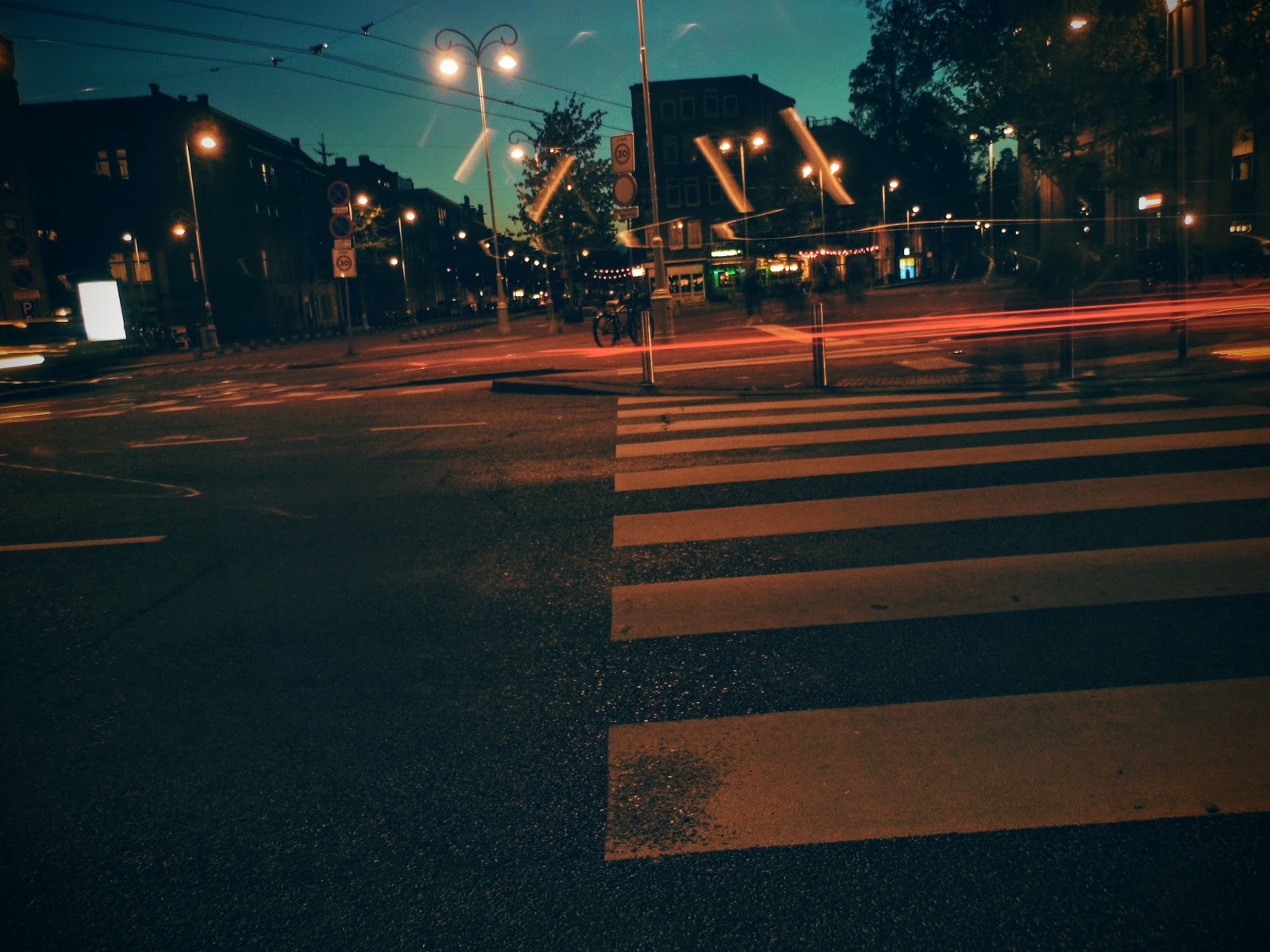
Below you will find some of Alex’s best photos so far. Naturally, Alex is working on improving his technique (and on buying proper equipment, once suitable funds have been drawn up).

Feedback, as usual, is appreciated.

20 Sept 2016

On Free Speech

Hello readers!

You may be wondering what Alex has been doing these past couple of days. He has already spoken on his experience thus far at university; but what, you wonder, of his writing? Has the Ark been assiduously extended and revised?

The answer to this question is of course: I have been busy writing the first chapter of part three, and have made changes regarding the tense for the prologue. If you wish to discover more, however, I will repeat what I have said previously. Signup to the mailing list and you will be able to actually read some of what I am writing, as well as get access to exclusive content.

Anyway, the topic of this post is of course not the Ark. Rather, it is about an age old issue recently inflamed into passion: free speech.

The articles that spurred me to write this are, in particular, the piece over at the LRB by David Bromwich, along with this piece in the Guardian. (And yes, I read the Guardian and the LRB almost exclusively. Quality media is a rare thing these days.)

I will begin by addressing the key arguments these authors propose, and complete this (hopefully succinct) essay by elaborating on my own position. So, without further ado, let us turn our attention to the business at hand.

Social Media and the Prophet Muhammad

I believe there are two key points that Bromwich makes in his piece on the LRB: the first is that social media is an ‘echo chamber’ (to use that popular political terminology). On social media, unlike real life, you interact only with people you agree with. Your ideas are met only with acquiescence; and so, gradually, you begin to go a little mad. Your ideas grow more and more extreme, ever further out of touch with ordinary people.

Or at least that’s the narrative Bromwich buys into. However, I am far from convinced, and question Bromwich’s experience with social media. From what I can see, there are two issues with this narrative. Firstly—in real life, as much as anywhere, one can live in a bubble.

People tend to prefer interactions with others like them. Be it in terms of class, education, or even political leanings, bubbles exist throughout the real world. Accusations of politicians ‘being out of touch’ would lack their rhetorical power were it not for this.

Secondly, while I agree that social media can act as an echo chamber, the opposite also holds true. The Internet allows us to interact with people who are very different from us—indeed, its capability to do so is unprecedented: nowhere else can one hold a conversation with someone from the other side of the world.

The second point Bromwich makes is exemplified by this paragraph:

Here is a thought experiment. What would be the Western reaction to a cartoonist who leaned heavily on the most flagrant anti-Catholic or anti-Jewish clichés – Jesuits in cowl and robe conspiring to set a Catholic king on the English throne, or Jews drinking the blood of a Christian child? The anti-Catholic swipe would be looked on as a bizarre eccentricity, of no controversial interest at all; the anti-Jewish one might prompt alarm as a symptom of cultural regression; but in either case, ascription of moral courage and artistic merit would be out of the question. This may suggest why the defence of Charlie Hebdo as an equal-opportunity offender was misjudged. The cartoons were published at a time when a few Muslims were known to be terrorists and many others were outsiders in European society, exposed to prejudice of a kind no longer suffered by Christians or Jews. Complacency was a recurrent flaw in the European and North American praise of the cartoons. There is, after all, a difference between ridicule of the established and mockery of the unestablished. Though the difference can never rightly be reflected in laws, since laws must apply to everyone in the same way, Charlie Hebdo might have served to bring the matter to consciousness. [sic]

I am, once more, skeptical. Comparing anti-Catholic, or even anti-Jewish satire with the kind of satire that Charlie Hebdo published is, frankly, a stretch. Catholics have not conspired to treason in Western countries for centuries. And anti-Semitic tropes—such as of the aforementioned drinking of babies’ blood, or of the international cabal, the usurious banker—all share one crucial property. They’re false.

But tropes about Muslims are not false. That’s where the line between Islamophobia and genuine liberal criticism needs to be drawn. Jews don’t run the world; but Muslims do issues fatwas (death threats based on heresy) to Danish cartoonists. Muslims do try to butcher said cartoonist with a hatchet, and they do kill certain cartoonists with AK-47s and RPGs. (Cough cough.)

This I believe is the crucial, and unfortunate misunderstanding about Charlie Hebdo. One may argue that sometimes they go too far. One may argue that they can be crude, or stereotype lazily. But at the end of the day, they have a point: Islam can’t tolerate criticism, no matter how justified.

Anyway, although I disagree with the author on these two counts, I do fundamentally agree with the broad stroke of his argument: that free speech is a political good to be valued. I will clarify this further by considering the arguments of Garton Ash in the Guardian.

Safe Spaces, or Free Speech?

Ostensibly it seems absurd that the fear of being offended—of trying to hide under the language of intellectual cowardice—should trump the political right to speak one’s mind. And this is indeed the thrust of Garton Ash’s argument.

But I feel the issue is not quite so clear cut. As Garton Ash puts it, how can someone giving a speech on the other side of campus possibly affect you? And yet that’s naive. Consider the example of transgender people. If someone of an anti-trans persuasion were to deliver a hateful speech against transgender people, there would be those who would be inspired by it. These bigots would in turn bully—and this is a light word for a serious issue—trans people, and we would see trans people killing themselves in even greater numbers than they already do. (Suicide is not a joke. This article is one of many showing disturbing statistics.)

The same could apply for any other persecuted minority you care to name. Should a radical Imam, for example, be allowed to foment hatred against gay people? Should he be allowed to suggest that women deserve rape? Should they, indeed, be allowed to promote terrorism?

Of course I am not talking about all Muslims here, let that be known. But the liberal left—who, ironically enough, are the ones calling for safe spaces—are in denial about terrorism. There exists a dangerous minority of radical Muslims in this country and around the world; and throwing petrol to their fire is nothing to joke about. Nor, indeed, is pretending that extremely disturbing attitudes (such as on homosexuality, the rights of women, and Shariah) aren’t prevalent in Muslim communities.

Anyway, I’m digressing.The point here is that the line between speech and action is sometimes very fine. It is why I support incitement-type laws (incitement to racial hated, incitement to violence, that sort of thing), and more broadly the principle that an institution—such as a university—has a responsibility towards its students to indeed keep them safe from violence or verbal abuse.

But: this is not to say that a university has a responsibility to protect its students from ideas that are merely controversial, offensive, or intellectually discomforting. The line is a fine one, and I believe it fair to say a difficult one, but it is a line nevertheless.

That is the prime topic of this little essay. However, there are one or two other things related to the issue that I wish to address.

The Crime of the Micro

The language employed by the liberal left, and more specifically (since the liberal left is itself a broad church) that of the Social Justice Warriors, is increasingly worrying. I am of course talking about such terms as the ‘microtrauma,’ the ‘microaggression,’ and the ‘trigger warnings’.

For those of you unacquainted, the basic definitions of the the terms is as following. A microtrauma is basically a social insult committed by a member of the Privileged Class (in the SJW hierarchy) to a member of the Oppressed Class. An example would be a white person not looking at a black person in a way that might be considered rude.

A microaggression is, similarly, an instance where a white person looks too closely at a black person, in such a way that it may be construed as offensive. And a trigger warning concerns sensitive subjects such as sexual assault, which may unduly distress the students.

If all of this is making you scratch your head, welcome to the club. To understand the kind of censorship the SJWs are proposing, and why it increasingly concerns academics, you need to understand this context. If an SJW sees oppression in the most trivial and harmless of social encounters, what do you think their reaction is to, say, a feminist icon arguing against trans women—let alone a hate preacher?

So yes: I will re-iterate my original point. We don’t need to give a platform to those who pose a real danger to the safety of our student body. But nor must we dream oppression where there is none; a balance must be struck.

But the Better Argument Will Win!

Finally, I will address the arguments that some of the more radical defenders of free speech provide.

The classic argument is, of course, the following. Provided that free speech is permitted, it is ineluctably the case that the weak arguments shall be dissected, discredited, and displaced by the more convincing arguments.

The theory is wonderful; the reality is not so rosy. The best historical example of this is of course the Holocaust. Hitler’s political narrative did, as historical fact shows, win out. He won two referendums—to extend his power and have Germany leave the League of Nations—with large majorities. His Nationalsozialistische partei was the largest in the Reichstag, having won the 1933 Federal election with 44% of the vote.

To defend themselves against this charge, proponents of the argument above engage in some creative intellectual gymnastics. The reason Hitler won, they say, is because there was no free speech!

Aside from being somewhat tautological, the key issue with this argument is its lack of historical veracity. It is true that Hitler engaged in censorship, but this was not true of the early years when Hitler was not in power. Remember: Hitler didn’t gain power through the means of a military coup. His power was democratic before it became autocratic.

I will therefore ask that one should not assume that good arguments will automatically displace poor arguments, as if by some natural process of osmosis. In the real world, people can be misinformed, stupid, ignorant and indoctrinated.

However...

At the same time, there is a valuable political good in free speech. On a first point of order, intellectual strength: any intellectual institution that censors the controversial is bound to end up decaying, its foundations undermined by dogma and unreason.

The second point of order is political—history may teach us that free speech is not an antidote to madness, but its lack often leads to political repression, and tends to be the purlieu of the autocratic regime.

At times, I would argue, it may make sense to limit some forms of free speech. Hate speech, as I have already mentioned; and indeed, in Germany as in many European countries, Holocaust denial continues to be illegal. Balance, as I say.

A Few More Distinctions

Often in debates about free speech, some important distinctions fail to be made.

Firstly, the oppression of free speech has a specific definition: it is committed by the state. An institution, like a university, ‘No-Platforming’ a speaker may sometimes be an act of intellectual cowardice, but it is not the repression of free speech. It is, as the name implies, about not giving someone a platform.

Even when the repression of speech does occur at the state level—such as when the German government bans Holocaust denial—it is not, by necessity, oppressive. Of course not! Unlike what the more radical defenders of absolute freedom of speech like to claim, jailing Neo-Nazis does not an authoritarian state make.

It is possible—emphasis on the word possible—that allowing Neo-Nazis and other such unsavoury figures to speak their mind can, indeed, lead to them being discredited: the leader of the BNP, Nick Griffiths, was so undermined when he was interviewed by the BBC.

But not always. As I say, there are no absolutes in free speech.

Conclusion

My essay has been somewhat long, I’m sorry to say, but I hope it has made clear my thoughts on free speech—and, hopefully, inspired you to think through your attitude to free speech.

Any disagreement (and I would be surprised if some of you did not disagree) and I will be happy to respond on the comments section. Remember: be civil. Alex is the autocrat of the Magical Realm, and thus has the power to censor all that he wishes ;)

15 Sept 2016

Life is Life, Amsterdam

You may have been wondering what my life, here in Amsterdam, has been like these past two weeks. Am I settling in? How is the city? And what of university life?

These questions I shall address herewith. If you are wondering as to how the Ark is going, however, you may wish to signup to the mailing list instead. You will receive regular weekly updates on my progress, along with sneak peeks into the Ark—a privilege you will not be privy if you simply follow the Magical Realm.

Anyway, onto business.

University Life

Uni life is... interesting. Different. And at times hectic—though, I suppose, that isn’t saying much. School has been hectic for many years, now that I look back. Indeed, over the past 6 years or so, I have had nothing but exams. First it was SATs; then the 11+; then GCSEs (in year 9); then more GCSEs; then ASs, and finally A levels. Suffice to say that whenever I hear of a test or assignment, I feel a wearied expectation rather than a pulse of fear.

Nevertheless, university life does have two aspects that are foreign to me. The first is the schedule of the lectures, and the way the workload is distributed more generally. I have lectures starting at four pm and ending at six; I have lectures starting at 9am; and I have everything in between, from 11 to 2. There is no regularity between days.

Is this confusing, you wonder? Certainly. I often find myself working well into the evening; and yet my afternoons are frequently free.

The second aspect is of course the fact that I, not the curriculum, dictate what courses I take. Yes, there are some requirements—I need to do a certain number of courses for my major, I need to take a Big Questions and a Theme course every year (or something), and I have Dutch and French learning periods for two months—but generally speaking, I have a lot of choice.

I can take whichever theme course suits me—be it Energy & Climate, Social Systems, or a multitude others. I can select my big questions course; be it Big Questions in History, Big Books, or whatever other topic picks my fancy. And in my minor, I can choose to do everything from sociology, photography, physics or computer science.

There is something a little bit daunting about it, I will admit. I need to take a certain number of courses to fulfill the university requirements. I need to take certain courses to pursue economics further on in the 3 years and for my masters (if I choose to do that). But, you know what? I can deal with that; choice is no bad thing.

Bureaucracy and Incompetence

Other aspects of my stay here have been less pleasant. The IKEA bed I ordered is missing some holes; I have demanded a refund from IKEA. And as for my (mandatory) registration to City Hall, well; that’s a bit of a story.

Firstly, I didn’t know what documents I needed—because the exact documents were not stated on the municipality website. So, I phone them—dialing the local number unsuccessfully before trying the international one—am put on hold, and finally told that I need to register through the university.

I go to the university... only to be told they can’t register me and I need to book an appointment with the municipality.

I call the municipality again, learn that I only need my ID card and rental contract (with the birth certificate after 3 months), and manage to book an appointment with them—on October the 28th!

So, as you can see, I have been rather busy.

The City

I have visited three parks here: one called Frankendael, another one right next to me, and one other near the Van Gogh museum. I have also visited the city centre—in particular the infamous Regulierwardstraat in the red light district.

The place has a reputation that precedes it. Rather than a hotpot of dubious activity, the place is rather civil and clean; the most notable irregularity is perhaps a sex shop and some gay bars.

Anyway, I have taken these opportunities to take some photos. I will be releasing them soon, so keep an eye out on the Magical Realm.

Cooking

Another aspect of my life that has changed is of course the need for me to cook my own meals. Initially, this proved difficult; I have the wonders of ready made salads and pizzas to thank for my survival. But soon, I found myself cooking—simple dishes such as salads, sausages, pasta, snitel and the like, but food nevertheless.

I have no delusions about my ability as a master gastronomer, but I at least have a modicum of confidence in the kitchen.

Calories are also of great interest to me. I have, over the past few months, tried to gain weight—and with some success. I weighed just 59 kilos a few months ago, but I know weigh over 62. I hope to reach 70kg in time; a feat which requires a great deal of calories.

I shall also try and hit the gym, though my student card has yet to arrive.

Parting Thoughts

Life here has so far proven interesting. The students are diverse and some have caught my attention; the courses are generally stimulating and interesting; and while there are some all but inevitable difficulties (particularly where it concerns bureaucracy) I am generally in good cheer.

Keep following the Magical Realm for more updates, photos, and important news about my writing. Until then, may the stars be with you...